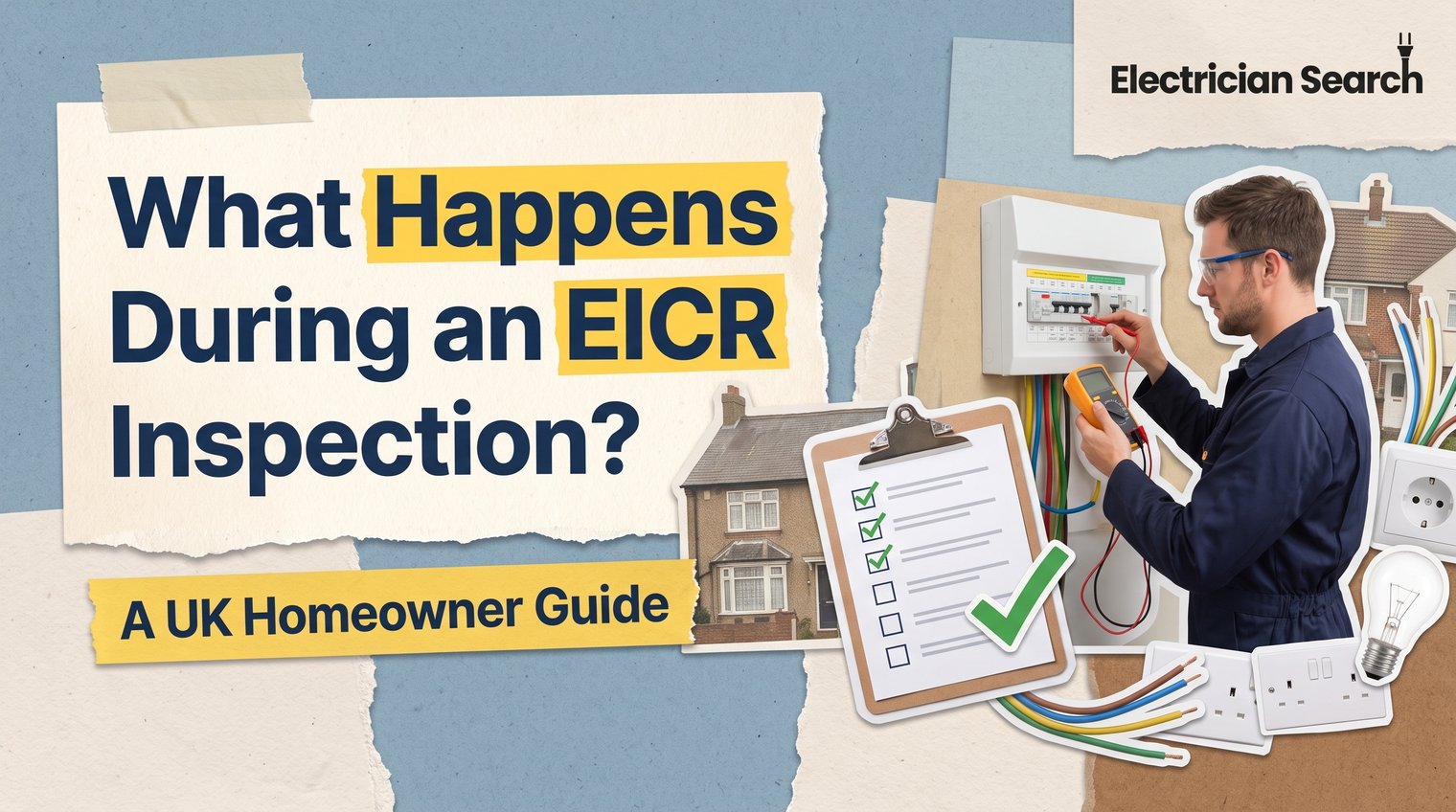
An EICR inspection involves a qualified electrician checking the condition of your property's fixed electrical installation, carrying out tests on its circuits and recording any safety issues in an Electrical Installation Condition Report. It is not a quick glance at the fuse box, and it is not a warranty check for every appliance you own.
In brief, the process is:
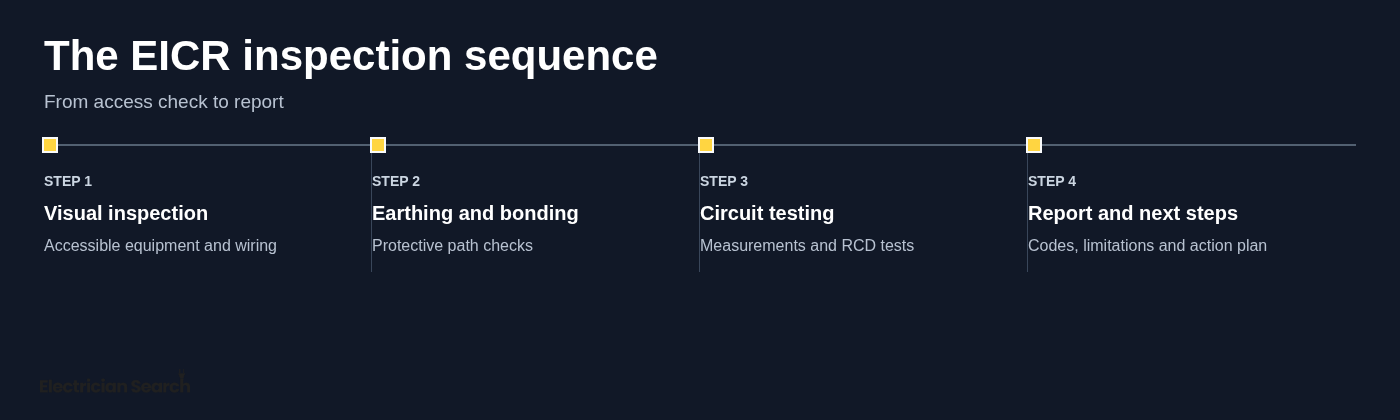
- access and visual checks;
- earthing and bonding checks;
- circuit and RCD testing;
- recording findings and limitations; and
- issuing the final report.
For broader preparation advice, see this Electrical Inspection Near Me: A UK Homeowner's Complete Guide.
What happens during an EICR inspection, in plain English
An EICR, or Electrical Installation Condition Report, assesses whether the fixed electrical installation appears safe for continued use. That includes the consumer unit, wiring, sockets, switches, lighting circuits and other fixed equipment within the agreed inspection scope.
The electrician starts by looking for visible defects, damage and signs of poor previous work. They then use test equipment to take measurements that cannot be judged by sight alone. The final report records the installation details, the tests completed, any limits on the inspection and any observations found.
One common misunderstanding is that an EICR checks every electrical item in the home. It does not normally cover portable appliances such as kettles, lamps, televisions or phone chargers. Those may require separate portable appliance testing if it is needed. An EICR is about the wiring and permanently installed electrical system supplying them.
Before the electrician starts: access, power and property preparation
Good access makes for a more complete and useful inspection. The electrician will usually need to reach the consumer unit, accessible meters and isolators, sockets, switches, light fittings, fixed equipment and any areas included in the appointment, such as garages, loft spaces or outbuildings.
Expect some circuits to be switched off briefly while testing takes place. It is sensible to save work on computers, plan around Wi-Fi interruptions and make sure electrical equipment that should not lose power is discussed beforehand. If the property has an alarm, electric heating controls, a home office or medical equipment, flag this before testing begins.
Tell the electrician about known issues too. Recent alterations, concealed wiring, sockets that intermittently stop working, tripping circuits, water damage and rooms with restricted access can all affect the scope of the EICR.
If an area or circuit cannot be accessed or tested, the electrician may record a limitation on the report. A limitation does not necessarily mean there is a fault, but it means the report cannot give a fully informed assessment of that part of the installation.
Step 1: visual inspection of the electrical installation
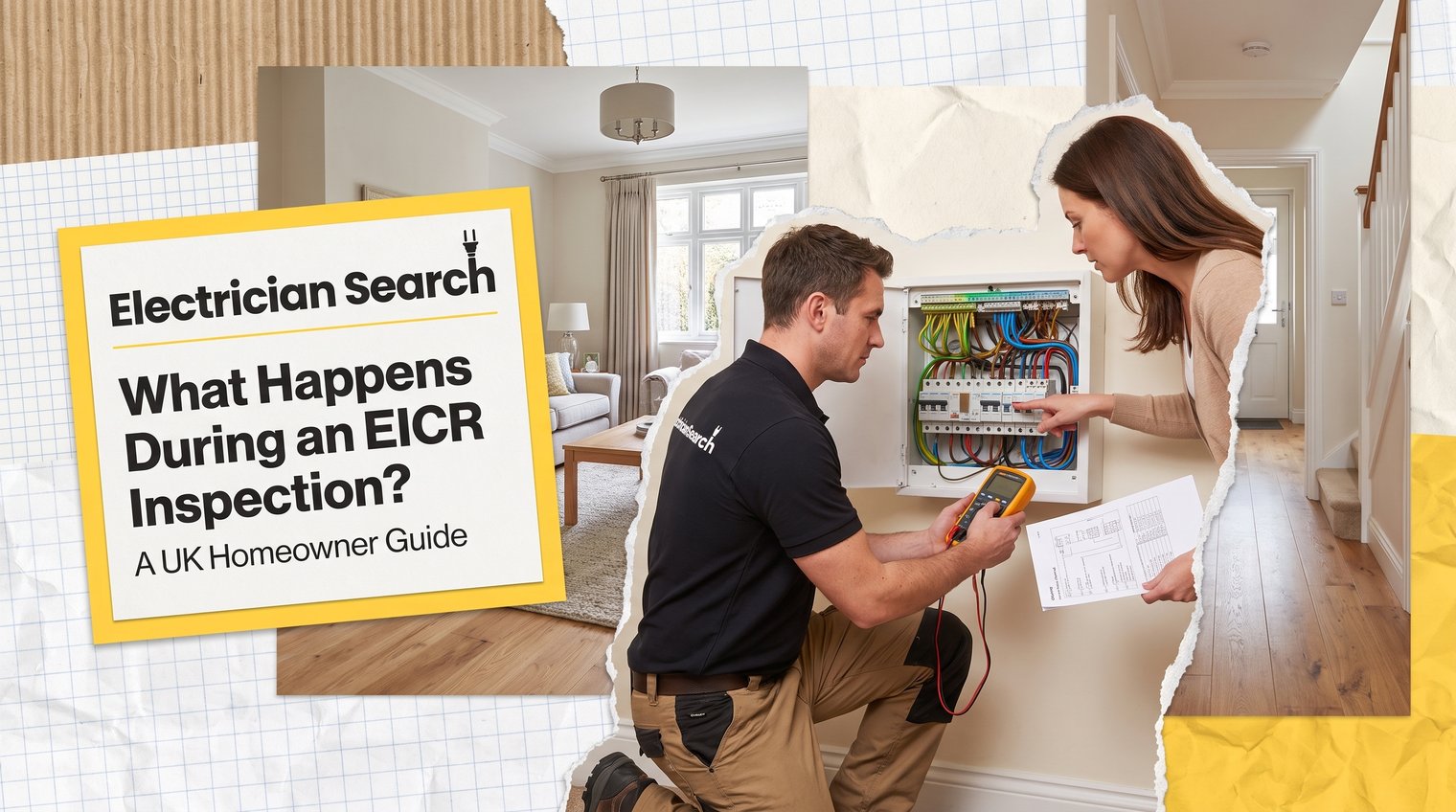
The visual inspection comes first. The electrician checks the condition of the consumer unit, the labelling of circuits, protective devices, accessible wiring, switches, sockets and other visible parts of the installation.
They may look for cracked accessories, missing covers, evidence of overheating, loose fittings, exposed conductors, unsuitable DIY alterations and cables that appear inadequately protected. Clear circuit labels matter more than many homeowners realise: when a fault occurs, confusing or incorrect identification can make isolation slower and less safe.
Accessible fixed equipment may also be included where relevant to the agreed scope. This could include items such as wired smoke alarms, electric showers, extractor fans or fixed heating controls. Portable appliances are not normally part of the EICR unless this has been separately agreed.
Do they check every socket during an EICR? Accessible sockets are usually inspected, and testing is carried out using an appropriate approach for the circuit and agreed scope. Whether every individual point can be tested depends on access, the circuit design, furniture, occupancy and the condition of the property. A socket hidden behind a heavy fitted unit, for example, may need to be noted as inaccessible.
Step 2: supply, earthing and bonding checks
The electrician will examine the incoming electrical supply arrangement and the measures that help protect people if a fault develops. This includes checking the main earthing conductor and main protective bonding to services where present.
In practical terms, earthing and bonding provide a path that helps protective devices operate when something goes wrong. If a metal part becomes live because of a fault, these arrangements help reduce the risk of electric shock and allow the circuit's protection to disconnect the supply.
The exact checks vary. A home's supply arrangement, the age of the installation, available access and the presence of services such as water or gas pipes all influence what can be inspected and tested. A competent electrician will assess the property in front of them rather than applying a one-size-fits-all checklist.
Step 3: electrical testing on circuits
Testing is the part of an EICR that checks what cannot be confirmed visually. The electrician uses calibrated test instruments at the consumer unit and, where needed, at selected points on the installation.
Tests may include:
- Continuity testing, which helps confirm protective conductors and circuit paths are connected correctly.
- Insulation resistance testing, which checks whether wiring insulation is adequately separating conductors.
- Polarity testing, which helps verify that connections are arranged correctly.
- Earth fault loop impedance testing, which assesses whether fault protection should disconnect quickly enough.
- RCD testing, where relevant, to check that residual current devices operate as intended.
Some of these tests require a circuit to be isolated temporarily. That short disruption is normal. However, if testing identifies a fault that means a circuit cannot safely be put back into service, the electrician may leave it switched off and explain why.
That can be inconvenient, but it is preferable to restoring power to a circuit with a potentially dangerous defect. Ask the electrician which circuit has been affected, what equipment it supplies and what needs to happen next.
What the electrician may find: common EICR observations
An EICR can identify anything from minor improvement opportunities to faults requiring prompt action. Common observations include damaged sockets or switches, signs of overheating at the consumer unit, poorly identified circuits, missing or ineffective RCD protection where it is required, inadequate earthing or bonding, and unsuitable alterations.
An observation does not automatically mean the whole installation is unsafe. The report gives each issue a code to indicate its seriousness and help you decide what action is needed.
Understanding C1, C2, C3 and FI codes
C1 means danger is present and urgent action is required. For example, accessible live parts would be a serious concern. C2 means the condition is potentially dangerous and needs improvement, even if immediate danger is not established at the time of inspection.
C3 means improvement is recommended. It is not normally a reason for an unsatisfactory outcome on its own. FI means further investigation is required because the electrician has identified something that cannot be safely assessed without additional work or testing.
C1, C2 and FI observations will normally result in an unsatisfactory overall outcome until the danger, defect or uncertainty has been addressed. The report should identify the affected circuit or location and explain the issue clearly enough for you to understand the next step.
What will fail an electrical inspection?
An EICR is normally marked unsatisfactory when it contains C1, C2 or FI observations. It is more accurate to think of this as a condition assessment with coded findings than a simple pass-or-fail exam.
For example, a cracked socket that leaves live parts accessible could receive a C1 observation. A significant earthing problem may be coded C2 because it could become dangerous under fault conditions. An unexplained test result might receive an FI code where the electrician needs further investigation before the risk can be properly assessed.
Remedial work is often separate from the inspection unless it was included in the original agreement. For non-emergency work, ask for a clear scope and quotation before authorising repairs. This Electrician Estimate Checklist can help you compare the proposed work. If the electrician identifies immediate danger, they may recommend urgent action such as isolating the affected circuit.
How long does an EICR take?
There is no reliable single time figure for every home. A small, accessible flat with a straightforward installation may take a few hours, while a larger or older property, or one with more circuits, consumer units, outbuildings or access issues, can take substantially longer.
Testing, recording results and producing meaningful documentation take time, particularly where faults need investigation. Be cautious of implausibly short visits, which may leave important areas untested or limitations poorly explained.
How to read the EICR report and decide what to do next
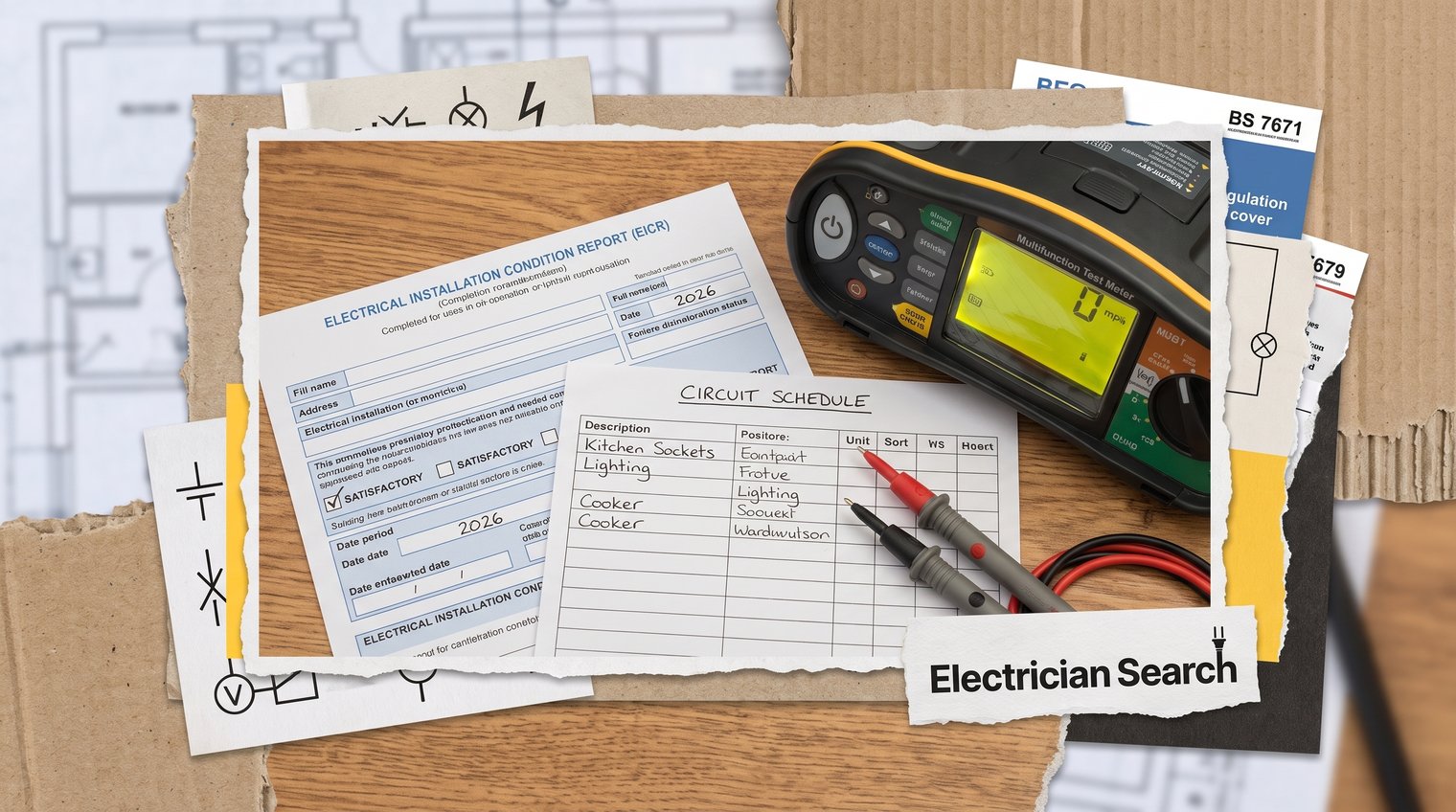
An EICR report is more than the final satisfactory or unsatisfactory statement. Read the installation details, the scope, any limitations, the inspection schedule, test results, observations and recommended date for the next inspection.
If you are looking at an EICR report example, focus first on the parts that affect your decision-making. Check whether any areas were excluded, then find the observation schedule and note any C1, C2 or FI codes. The test results are useful evidence for an electrician, but the observations and their locations are usually the most practical starting point for a homeowner.
Keep the report with paperwork for any remedial work. Certificates, invoices and written details of what was repaired can be useful for future owners, tenants, insurers or electricians carrying out later work. For related documentation, see What Certificate Should an Electrician Provide After Work?
After your EICR: make the report useful
Act immediately on any identified danger, and arrange investigation or remedial work for C2 or FI observations without unnecessary delay. Keep the original EICR and follow-up paperwork together, and act on new warning signs such as burning smells, repeated tripping, damaged accessories or electric shocks even if the report was satisfactory.
If you need a local electrical professional, ElectricianSearch can help you find providers by area and contact a suitable electrician for an EICR or follow-up work.