After electrical work, you should usually receive either an Electrical Installation Certificate (EIC) for new or major work, or a Minor Electrical Installation Works Certificate for an appropriate smaller alteration. An EICR is different: it reports on the condition of existing wiring and is not normally the completion certificate for newly installed work.
For some domestic jobs, especially work covered by Building Regulations notification rules, you may also need separate evidence that the work has been notified and complies with the relevant requirements. Ask what paperwork you will receive before work begins, not after the final invoice arrives.
The short answer: ask for the certificate that matches the work
The right certificate depends on what was actually done. A new circuit, consumer-unit replacement or rewire generally calls for an Electrical Installation Certificate. A limited alteration to an existing circuit may be covered by a Minor Works Certificate.
Do not accept vague reassurance that the work has been "tested" or "signed off" without asking what document will be issued. Proper testing is important, but the certificate is the record of that testing, the work undertaken and the person responsible for it.
An Electrical Installation Condition Report, often called an EICR, is not a substitute for either completion certificate. It records the condition of an installation at the time it is inspected; it does not normally certify a new circuit or alteration that has just been completed.
Where domestic work is notifiable, Building Regulations compliance confirmation may be needed as well. That is separate from the electrician's EIC or Minor Works Certificate.
1. Electrical Installation Certificate (EIC): for new installations and major alterations
An Electrical Installation Certificate is generally the certificate to expect after a new installation or substantial electrical work. Typical examples include a full or partial rewire, a new circuit for a cooker or shower, a replacement consumer unit, or a significant addition to the installation. If you are planning a rewire, see How to Prepare for a House Rewire: A UK Homeowner's Guide.
An EIC is more than a receipt. It records the design, construction, inspection and testing of the work, along with circuit information, test results, any limitations and the people responsible for the work. Depending on how the job was organised, design, installation and inspection/testing responsibilities may be recorded separately.
The certificate should relate to your property and the specific work completed there. It should be issued after the relevant inspection and testing has taken place, rather than being a verbal promise that paperwork can be supplied later.
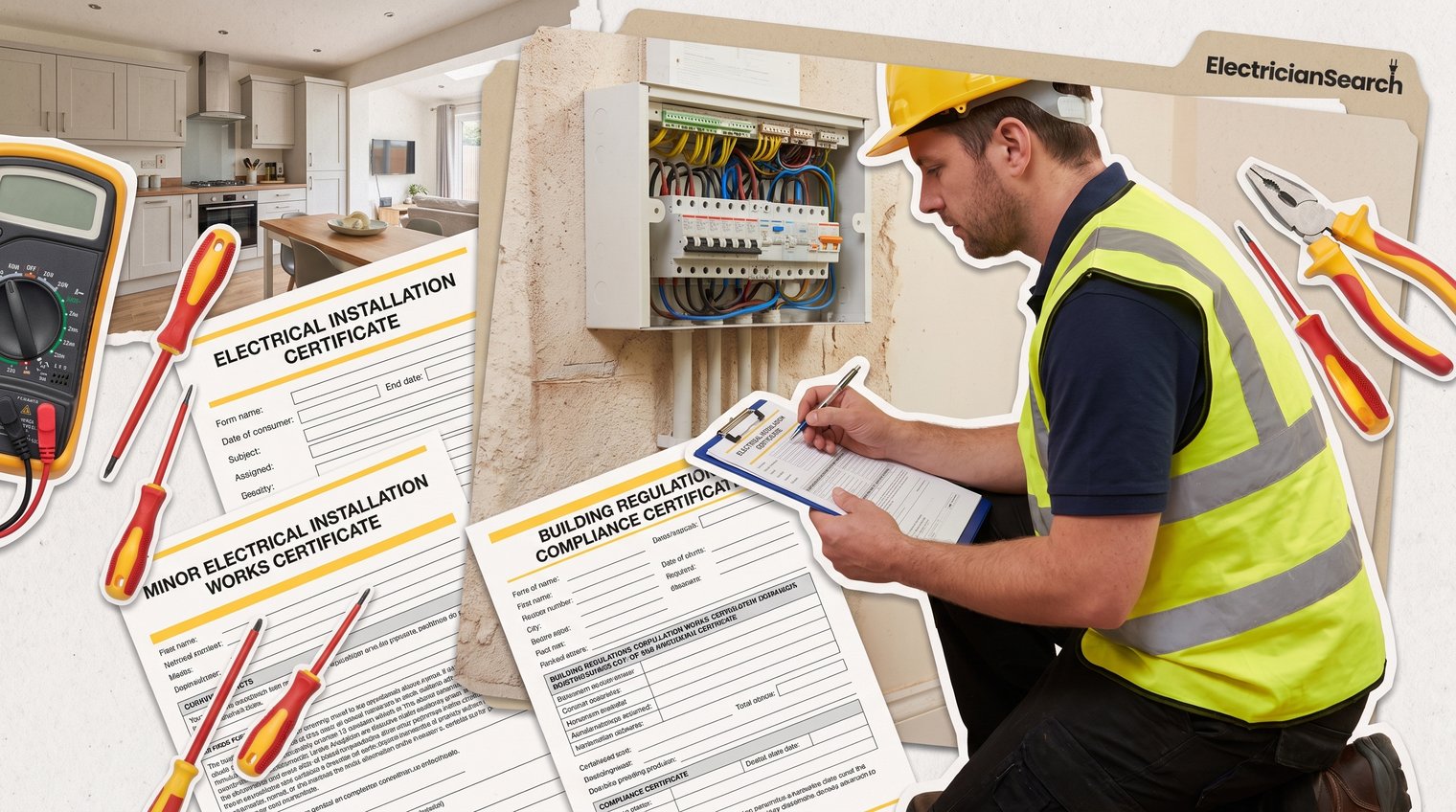
For example, if an electrician installs a new circuit from the consumer unit to supply an electric shower, an EIC would normally be the appropriate completion document. A basic invoice saying "shower wiring installed" does not contain the same evidence of testing or installation details.
2. Minor Electrical Installation Works Certificate: for additions and alterations to existing circuits
A Minor Electrical Installation Works Certificate, often shortened to a Minor Works Certificate, is used for suitable additions or alterations to an existing circuit. It is not intended for work that creates a new circuit or for a consumer-unit replacement.
Examples may include moving or adding a socket outlet on an existing circuit, fitting a fused spur, or altering part of an existing circuit where the work can be properly inspected and tested. The exact certificate needed depends on the scope of the job and the condition of the circuit being altered.
Minor works does not mean unimportant work. The electrician still needs to verify that the alteration is safe and that the existing circuit can support it. If the job is more extensive than first expected, or testing identifies a problem, a Minor Works Certificate may not be the right outcome.
That is why homeowners should not request a particular certificate simply because it sounds simpler. Explain the work you need, then ask the electrician which certificate is appropriate and why.
3. Electrical Installation Condition Report (EICR): an inspection report, not proof of completed installation work
An Electrical Installation Condition Report assesses the apparent condition and safety of an existing electrical installation at the time of inspection. It is commonly requested for rental properties, before buying a home, as part of periodic checks, or when there are concerns about older wiring or recurring faults.
An EICR can identify observations, limitations and faults that need attention. It may recommend remedial work, but it does not by itself prove that a later installation or alteration has been completed and tested correctly.
A landlord may have an EICR for a property, then arrange for a new circuit. The new circuit should have its own appropriate completion certification. The EICR and EIC serve different purposes.
It is a common mistake to ask for an "EICR certificate" after new work because the term is familiar. For completed installation work, ask whether you should receive an EIC or Minor Works Certificate instead.
When does electrical work need to be signed off?
Electrical work should be inspected, tested and appropriately certified when certification is required for its scope. However, "signed off" can refer to two separate things: the electrician's own test certification and Building Regulations notification or compliance evidence for applicable domestic work.
In England and Wales, some domestic electrical work may be notifiable under Building Regulations. The route for dealing with this depends on the work and who carries it out. Requirements also vary across the UK, so do not assume advice for one nation automatically applies everywhere else.
Before work starts, ask the electrician to confirm in writing:
- What certificate you will receive after completion.
- Whether the work is notifiable under the relevant Building Regulations rules.
- Who will inspect and test the work.
- When the completion paperwork will be issued.
- Whether any compliance notification evidence will follow separately.
This matters most for work such as a consumer-unit replacement, new circuits and larger domestic alterations, but it is a sensible question for any job involving fixed wiring. It prevents a dispute later over whether the quote included testing, certification and any required notification process.
What a valid certificate after electrical work should include
A certificate after electrical work should be specific enough to connect the document to your home and the actual installation work. An invoice alone is useful for payment records, but it is not generally a replacement for technical certification.
Check that the certificate or authenticated digital record includes relevant details such as:
- Your property address.
- A clear description of the work completed.
- Installation or circuit details where applicable.
- Inspection and test results.
- Any observations, departures or stated limitations.
- The completion and inspection dates.
- The responsible person's or company's details.
- Required signatures or equivalent authenticated digital approval.
The document should not be generic or refer to a different address, circuit or job description. If something looks unclear, raise it promptly while the electrician still has the job details and test records available.
Keep the completion certificate with the invoice, product warranties and any Building Regulations paperwork. These records can be useful during a future sale, insurance query, further alteration, landlord compliance check or electrical safety inspection.
What to do if you do not have an electrical installation certificate
Start by contacting the original electrician or company. Give them the property address, approximate work date and invoice reference, then ask for the relevant EIC or Minor Works Certificate and any Building Regulations compliance reference that applies to the job.
If the installer cannot provide the paperwork, do not assume another electrician can simply recreate it. A later electrician did not design, install or observe the original work, so they may need to inspect and test it before they can say anything meaningful about its current condition.
A competent registered electrician may recommend testing, remedial work or an EICR, depending on what is visible, accessible and safe to assess. That later inspection can provide valuable information about the installation as it stands, but it is not automatically equivalent to the original completion certificate.
This distinction matters when selling a property or answering questions about past work. Be honest about what records you have, retain any invoices or correspondence, and get professional advice on the practical next step for the work involved.

Questions to ask before you hire an electrician
The easiest way to avoid missing paperwork is to agree the certification arrangements before booking. If you are comparing local providers, the Electrician Near Me: 9-Point Checklist for Choosing a Local Pro can help with the wider selection process. Add the following questions to your quote discussion:
- What certificate will I receive for this job?
- Is any part of the work notifiable, and how will that be handled?
- Who will carry out the testing and certification?
- Is testing and certification included in the quoted price?
- When should I expect the certificate and any compliance evidence?
These questions are particularly important where one company quotes for the work but another person will undertake testing, or where subcontractors are involved. You need a clear answer about who holds responsibility for the completed documentation.
You should also check that the quoted scope matches what you have requested. A quote for replacing a fitting may not cover a new circuit, fault finding, remedial work to an existing circuit or Building Regulations-related administration if those become necessary. For general budgeting, see How Much Does It Cost to Hire an Electrician in the UK?.
Keep the right certificate with the job
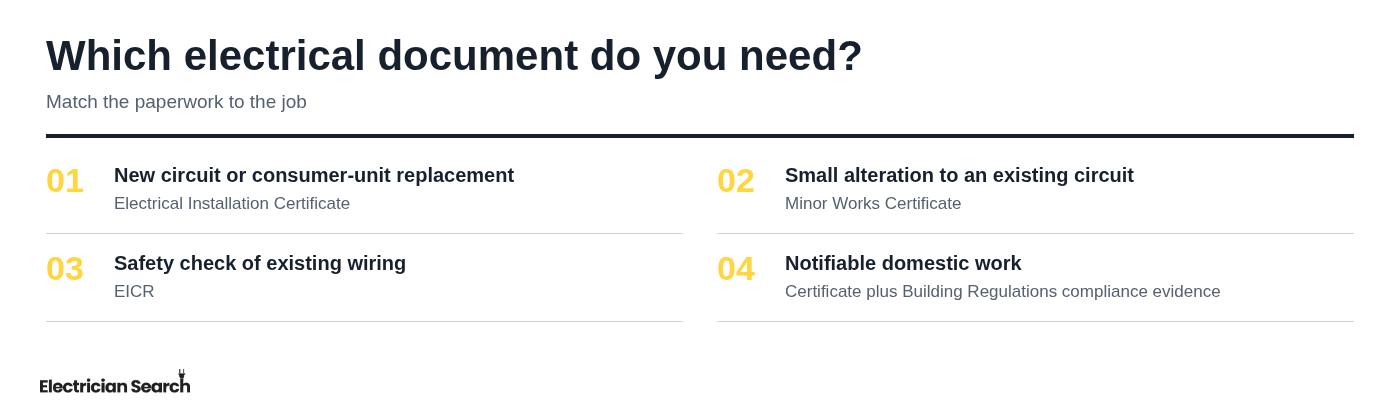
For new circuits, consumer-unit replacements, rewires and other substantial installation work, expect an Electrical Installation Certificate. For suitable smaller additions or alterations to an existing circuit, a Minor Works Certificate may be appropriate. For a safety assessment of existing wiring, the relevant document is an EICR.
Where notifiable domestic work is involved, ask about Building Regulations compliance evidence in addition to the electrical certificate. The best time to clarify this is before you accept the quote.
Compare nearby listed electricians on ElectricianSearch and ask each what certificate and compliance evidence are included before booking.