
Electrical problems are easy to ignore until they become urgent. A socket that feels warm, a consumer unit that trips repeatedly, or an old installation with no paperwork can leave you wondering whether you need a repair, a full electrical inspection, or immediate emergency help.
For UK homeowners, the answer depends on why you need someone to attend. A formal inspection can give you a documented view of your installation's condition, but it is not a substitute for urgent fault work when there are signs of danger.
When You Need an Electrical Inspection
An electrical inspection is useful when you need evidence about the overall condition of your home's fixed electrical installation. That includes the wiring, consumer unit, sockets, switches, protective devices and earthing arrangements. The formal report most homeowners mean is an Electrical Installation Condition Report, usually called an EICR.
You may want an EICR when buying an older property, planning significant renovation, inheriting a house with unknown electrical history, or simply wanting a professional assessment of an installation that has not been checked for years. Landlords may also need a report to meet their legal responsibilities, although requirements differ across the UK and should be checked for the relevant nation.
Do not wait for a routine appointment if you notice a burning smell, smoke, buzzing from electrical equipment, electric shocks, repeated tripping, overheating sockets or switches, scorch marks, or visible cable damage. If it is safe to do so, switch off the affected circuit or the main supply. Keep away from damaged equipment and arrange urgent help from a qualified electrician. Never remove consumer-unit covers or attempt to investigate live electrical parts yourself.
An inspection is also different from a call-out for one obvious repair. If one socket has stopped working, an electrician may need diagnostic fault-finding first. A condition report examines the installation more broadly; fault finding focuses on identifying and repairing a specific problem.
Quick answer: the right inspection for the job
- You need documented evidence of an installation's condition: ask for an EICR.
- You have a recurring trip, dead circuit or intermittent fault: book diagnostic work first, then discuss whether a wider inspection is sensible.
- You are buying a property: arrange an inspection before exchange where possible, especially if the installation is old or records are missing.
- You have just had new electrical work installed: ask for the appropriate installation certificate, not an EICR alone.
Only the inspection findings can establish whether an installation is satisfactory. Age, appearances and a seller's assurance are not a reliable substitute for testing.

What an Electrical Inspection Covers
A residential electrical inspection looks at the fixed installation rather than every electrical item in the home. The electrician will typically consider the consumer unit, circuit protection, fixed wiring, sockets, switches, lighting circuits, earthing and bonding, and visible signs of deterioration or unsuitable previous work.
They will also assess whether the installation appears appropriately protected for its use. For example, the condition of protective devices, the presence and operation of RCD protection where relevant, and the integrity of accessible accessories all matter. An inspection is not just a visual once-over; it combines observation with measured test results.
Scope matters. Concealed wiring cannot be fully examined without opening building fabric, and inaccessible lofts, locked outbuildings, built-in furniture or disconnected equipment can limit what is tested. A proper report should record meaningful limitations rather than pretending those areas were checked.
Visual checks and electrical testing
The visual element identifies visible damage, poor workmanship, inappropriate accessories, signs of overheating and equipment that appears unsuitable for its environment. The testing element checks whether circuits and protective measures perform as expected.
Depending on the installation and what can be safely tested, this can include checks relating to polarity, continuity, insulation resistance, earth fault loop impedance and RCD operation. These are technical tests that help an inspector assess whether a circuit can disconnect safely in the event of a fault and whether the wiring is in acceptable condition.
Testing may require temporary isolation or brief interruptions to power. The electrician should explain this before beginning, particularly where alarms, IT equipment, electric heating, refrigeration or medical equipment could be affected. This is professional inspection work, not a DIY testing exercise.
What an inspection does not usually include
An EICR does not normally test every portable appliance. Kettles, televisions, washing machines and similar items may require separate appliance testing if that is needed. Nor does an EICR guarantee that a future fault will never develop.
It may also exclude inaccessible wiring, sealed voids, specialist systems and equipment that cannot be safely disconnected or tested during the visit. Before booking, ask what areas will be included, whether outbuildings are covered, and what access you need to provide.
Who Can Carry Out a Home Electrical Inspection in the UK
Choose a competent electrician or electrical contractor with real inspection-and-testing experience. Do not assume that every electrician who carries out small repairs routinely completes domestic EICRs, particularly in larger or older properties where circuit identification, access and testing can take time.
Look for someone who can explain the scope clearly, carry out the required testing, and issue the appropriate written report. You should also check that they hold relevant credentials, have suitable insurance, and have experience with homes similar to yours.
Local reviews can help you assess communication and reliability, but they are not proof of inspection competence. Ask direct questions before you book, especially if you need the report for a property purchase, tenancy, insurance query or planned renovation.
Competent person schemes and what to verify
Membership of a recognised competent person scheme can be a useful starting point when assessing an electrician's credentials. Verify any claimed membership through the relevant scheme's current public register before booking. It should not be treated as an automatic guarantee that a provider is the best fit for every inspection, however. Domestic EICR experience, clear communication and a properly defined scope still matter.
- Do they regularly complete domestic EICRs, not just repairs or installations?
- Will they confirm the property type, number of consumer units and likely circuit count before quoting?
- Is the scope provided in writing, including outbuildings and communal or external areas where relevant?
- Is the price based on a stated number of circuits, a property size, a day rate or another basis?
- When will you receive the report?
- Do they offer remedial work, and can you obtain the report before deciding who carries it out?
That last point is important. The electrician who inspects can also quote for repairs, but you are entitled to understand the findings and compare like-for-like scopes before authorising non-urgent work.
Electrical Inspection, EICR and Electrical Safety Certificate: Know the Difference
"Electrical safety certificate" is a loose phrase people often use when searching for an electrical inspection near me. In practice, the correct document depends on the work or assessment being carried out.
An Electrical Installation Condition Report, or EICR, assesses the condition of an existing electrical installation. It records observations, test results and any limitations, then gives an overall outcome based on the findings.
An Electrical Installation Certificate is generally associated with new electrical installation work, such as a new circuit or major installation. A Minor Electrical Installation Works Certificate is used for certain smaller alterations or additions to an existing circuit. Neither is a replacement for a condition report of the whole installation. For more detail, see what certificate an electrician should provide after work.
Landlords in England have specific electrical safety duties, including requirements around inspection and testing. Scotland, Wales and Northern Ireland have their own rules and housing standards. If you are letting property, check the current requirements that apply where the property is located rather than relying on general advice.
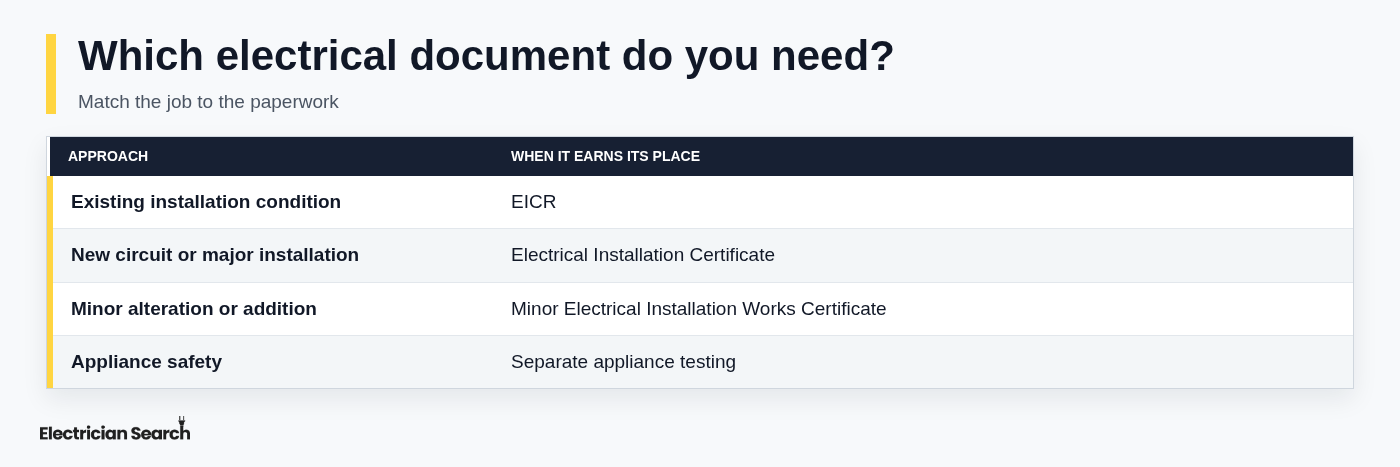
| Situation | Usually relevant document |
|---|---|
| Assessing the condition of existing fixed wiring | EICR |
| Installing a new circuit or major new installation | Electrical Installation Certificate |
| Smaller alteration or addition to an existing circuit | Minor Electrical Installation Works Certificate |
| Checking portable appliances | Separate appliance testing where required |
How to Find a Suitable Electrical Inspector Near You
Start your search with specific terms such as "residential electrical inspection near me" or "EICR electrician" plus your town or postcode area. The aim is not to book the first result; it is to create a sensible shortlist of nearby providers who can carry out the exact inspection you need.
Once you have several names, contact them with the same core details: property type, approximate age, number of consumer units, whether there are outbuildings, any known faults, and why you need the inspection. Comparable information produces more comparable quotes. You can also use this electrician near me checklist when comparing local providers.
Ask each provider to confirm what the price includes. A quote should ideally state the number of circuits included, whether testing of an outbuilding is included, whether the EICR report is included, expected turnaround, and any exclusions. The cheapest headline figure may cover only a limited number of circuits or leave report costs and return visits unclear.
Be cautious with vague offers of a "free inspection." A no-charge initial assessment can be legitimate, but a formal EICR requires time, testing and report preparation. It is reasonable to expect a fee for that work.
Use a local directory to shortlist electricians
A local directory can make the first stage faster by helping you find listed electrical professionals in your area. You still need to check credentials independently, explain your needs, and compare written scopes rather than assuming every listing offers the same inspection service.
ElectricianSearch is one option for browsing electricians by city and contacting local providers. Use it to build a shortlist, then ask each electrician whether they undertake domestic inspection and testing and will provide a clearly scoped quote.
ElectricianSearch

ElectricianSearch is most useful at the discovery stage: it helps homeowners browse local electrician listings by city and identify providers to contact. That is valuable when you need a nearby starting point rather than a national call centre or an unfocused web search.
Its limitation is equally important: a directory listing alone does not establish the provider's current availability, inspection-and-testing experience, price, insurance position or suitability for your property. Choose this route if you want to find local contacts efficiently, then verify the details that matter for an EICR or fault investigation yourself.
How Much Does an Electrical Inspection Cost?
Electrical inspection near me prices vary because homes vary. A small modern flat with one accessible consumer unit is a different job from a large older house with multiple circuits, an outbuilding, altered wiring and limited access to sockets or cupboards.
The main cost factors are property size, age and complexity, number of circuits and consumer units, occupancy, access, travel, urgency, and whether the electrician expects time-consuming circuit tracing. An inspection following flood, fire damage or repeated faults may also require different work from a routine condition report.
For that reason, treat any advertised figure as a starting point, not a universal promise. Compare the inspection scope, included report, circuit allowance and exclusions before comparing totals. A lower quote can be false economy if it does not cover the areas you need assessed or charges extra for the final report.
Remedial work is usually separate from the inspection fee. This separation can help you see what you are paying for: first, an evidence-based assessment; then, if needed, a defined repair proposal. As covered later in the worked example, the report codes should drive the repair priorities, not a generic sales package.
Questions to ask before accepting a quote
- Does the quoted price include the EICR report and all test results?
- How many circuits and consumer units are included?
- Are garages, garden supplies, sheds or other outbuildings included?
- Is VAT included where applicable?
- What happens if circuits cannot be safely accessed or tested?
- Are return visits, reinspection or updated paperwork charged separately?
- Can you provide a separate estimate for remedial work after the report?
- When should I expect the completed report?
A fixed price can still have fair exclusions. For instance, an electrician cannot fully test a circuit hidden behind fixed joinery or safely access a locked area without prior arrangements. The key is to make those possibilities clear before the visit.
What Happens During an Electrical Inspection Appointment
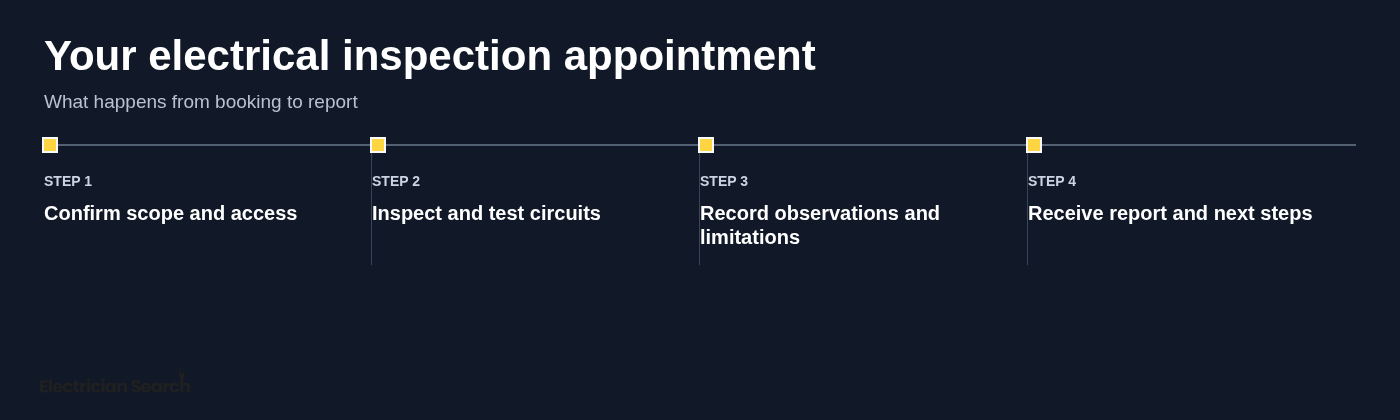
A well-run appointment begins with a brief confirmation of the agreed scope. The electrician should establish which consumer unit or units are included, whether any outbuildings are part of the inspection, and whether there are known issues such as nuisance tripping, damaged sockets or recent water ingress.
They will then inspect accessible parts of the installation and carry out appropriate testing. Some testing requires circuits to be isolated or switched off briefly, so there may be temporary disruption. If a test identifies an immediate concern, the electrician should explain the issue and any urgent action required.
After the practical work, the findings are recorded and the report is prepared. Some providers issue the completed report on the day; others send it later after review. Ask about the expected turnaround before booking, especially if you have a purchase deadline or tenancy requirement.
Prepare by making the consumer unit accessible, clearing reasonable access to sockets and fixed wiring accessories, and arranging entry to lofts, garages, sheds and locked rooms included in the scope. Tell the electrician about recent electrical problems, alterations, solar equipment, EV chargers, alarm systems or anything likely to be affected by a short interruption. Do not remove covers, expose wiring or attempt repairs in advance.
How to Read an EICR: Results, Codes and Limitations
An EICR usually includes an overall outcome, a schedule of observations, test results and any limitations that affected the inspection. Read all four parts. The overall outcome matters, but it does not tell you everything about what needs doing, where it is located or how urgent each issue is.
Common observation codes include:
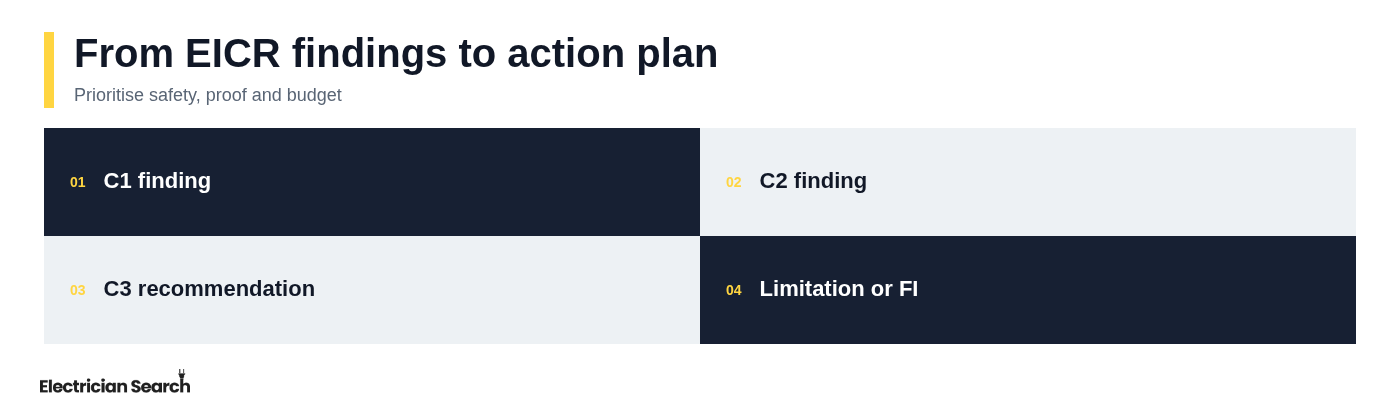
- C1: danger present. Immediate action is required to make the situation safe.
- C2: potentially dangerous. Urgent remedial action is needed.
- C3: improvement recommended. This does not normally make the report unsatisfactory on its own.
- FI: further investigation required. The inspector needs more information or targeted work before the risk can be fully assessed.
A limitation is not necessarily a defect. It records an area or condition that prevented full inspection or testing, such as inaccessible equipment or a circuit that could not be isolated without disrupting essential systems. It may nevertheless need follow-up if it affects the confidence you can place in the report.
Ask the inspector to explain priorities in plain English. The same code can involve very different practical jobs depending on the location, the circuit and the reason for the observation.
What will fail an electrical inspection?
An EICR may receive an unsatisfactory outcome where there are C1 or C2 observations, or where further investigation is required. Examples can include exposed live parts, damaged accessories, unsafe earthing or bonding arrangements, protective devices that do not operate correctly, signs of overheating, unsuitable consumer-unit issues, or test results that indicate the circuit is not performing within acceptable requirements.
An unsatisfactory report does not mean the house is beyond repair or that every part of the installation must be replaced. It means the report has identified work needed to reduce risk and achieve a satisfactory condition. The right response is to understand each observation, prioritise safety work, and obtain a clear proposal for the necessary remediation.
A Worked Example: Turning an Unsatisfactory EICR into a Repair Plan
Imagine a homeowner receives an EICR for a 1970s three-bedroom house. The report contains one C1 observation, two C2 observations, three C3 recommendations and one limitation because a locked garden office could not be accessed.
The C1 finding is a cracked socket accessory with accessible live parts in a utility area. The electrician makes it safe immediately by isolating the affected circuit and replacing the damaged accessory where authorised to do so. That action comes before any discussion about upgrades, appearance or budget.
The two C2 findings are an issue with bonding arrangements and a circuit where test results indicate the protective arrangement needs urgent remedial work. The homeowner should request an itemised proposal that links each report reference to a specific action. A useful quote says what will be repaired or replaced, what materials are assumed, what testing follows, and what certificate or updated evidence will be provided.
The C3 items might include recommendations to improve labelling, upgrade a worn but not currently dangerous accessory, and consider additional protection during future improvement work. These can be planned separately once C1 and C2 issues are addressed. They should not be bundled into essential safety work without a clear explanation of their status.
The inaccessible garden office is neither proof of a fault nor something to ignore. The homeowner should arrange access and ask whether a targeted follow-up inspection is required. If the office has its own supply or consumer unit, that may be especially important.
To compare two remedial quotes fairly, create a simple checklist from the report:
| Report item | What the quote should explain |
|---|---|
| C1 damaged accessory | How it was made safe, any replacement work, and testing completed |
| C2 bonding issue | Exact remedial work, materials, testing and any assumptions about access |
| C2 circuit test concern | Whether repair, investigation or circuit alteration is proposed, plus post-work testing |
| C3 recommendations | Clearly separated optional improvements with individual costs |
| Garden office limitation | Whether a return visit is needed and what that visit includes |
Do not accept a vague quote that says only "EICR remedials." You need to see how each observation will be resolved and whether the price includes testing, certification and any reinspection needed to confirm the outcome.
Can You Do Electrical Work Yourself and Have It Inspected?
Some minor electrical work may be undertaken by a capable person, but that does not make DIY electrical work a simple route to certification. Electrical safety, Building Regulations requirements and the evidence needed to show compliance can make certain jobs risky and impractical for homeowners.
An electrician attending later is not simply there to "sign off" unknown work. They need to understand what was installed, assess whether it is suitable, test it properly and decide whether they can issue the relevant documentation. If key parts are concealed or there is no reliable evidence of how the work was completed, that may be difficult or impossible without further work.
Speak to a qualified electrician before starting any proposed alteration, particularly for new circuits, consumer-unit work, bathrooms, kitchens, outdoor supplies and other higher-risk work. In many cases, using a competent professional from the outset is safer, clearer and less expensive than trying to correct uncertain work later.
When to Rebook an Inspection or Call an Electrician Sooner
A new or updated inspection can be sensible after major alterations, flood or fire damage, a substantial change in how a building is used, or the discovery of an old installation with little known history. It is also worth considering before purchase where the electrical condition is uncertain, and before letting a property where applicable rules require it.
Repeated tripping, flickering lights, intermittent power loss, shocks, hot accessories, unusual smells and visible deterioration are different. These are reasons to call an electrician promptly for fault investigation or urgent help, not to wait weeks for a routine EICR appointment.
Periodic assessment is a planned way to understand condition over time. Fault response is about resolving a live problem. Knowing the difference helps you book the right service and explain the situation accurately when you call.
Book the Right Electrical Inspection with Confidence
Start with the reason you need the inspection: a property purchase, concern about an old installation, landlord duty, renovation plan or a need for documented condition evidence. Then choose a competent local electrician with domestic inspection-and-testing experience, agree the scope and price in writing, and make sure access can be provided on the day.
When the report arrives, deal with C1 and C2 findings in the right order, understand any limitations, and compare remedial quotes against the actual observations rather than a vague description of "required work." A condition report is most useful when it becomes a clear safety plan.
Browse ElectricianSearch by city and request a clearly scoped electrical inspection quote.