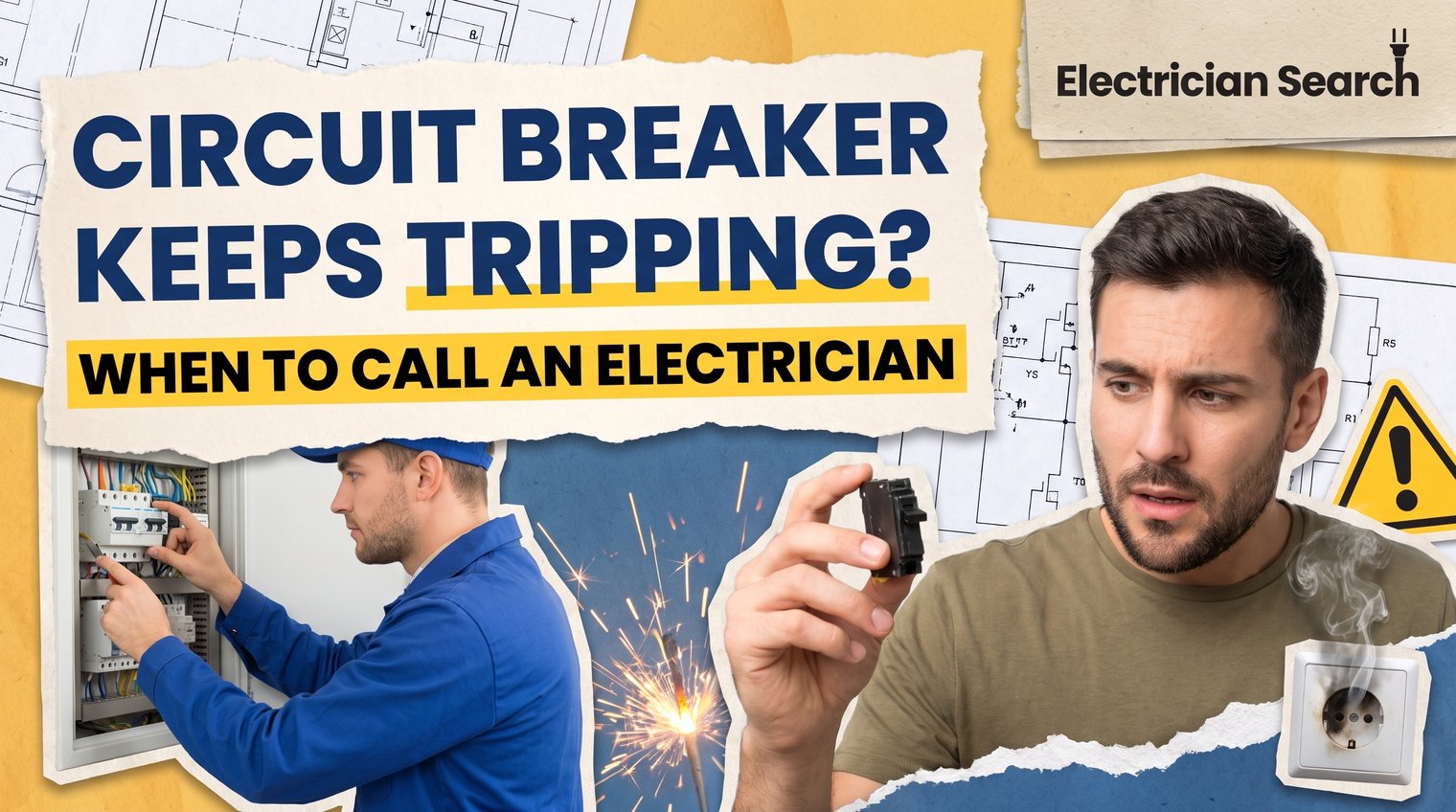
If your circuit breaker keeps tripping, do not treat it as an annoyance to reset again and again. One trip may simply mean the protection has done its job, but repeated tripping can point to an overloaded circuit, a faulty appliance, damaged wiring or water ingress - all issues that need the right response.
Start by making the affected area safe. If the breaker trips immediately, will not reset, or you notice heat, a burning smell, buzzing, smoke, water or damaged fittings, leave it off and contact an electrician.
A repeatedly tripping breaker is a warning, not a nuisance to reset
A trip is a safety feature. The protective devices in your consumer unit are designed to cut power when they detect a problem that could otherwise lead to overheating, electric shock or fire.
In UK homes, people often call every switch in the consumer unit a circuit breaker. In practice, you may have MCBs, which protect circuits from overloads and short circuits, alongside an RCD or RCBO, which can disconnect power when it detects an earth-leakage fault. The exact device that has moved to the off or tripped position can give an electrician useful information.
Do not keep resetting a device that trips straight away. The same applies if there are scorch marks, a warm socket, a crackling sound, a smell of burning plastic, visible cable damage or any chance that water has reached electrical equipment. Switch off the affected circuit if it is safe to do so, keep people away from the area and arrange professional help.
Make the area safe before you investigate
You can make a few basic checks without attempting electrical repairs. First, turn off and unplug appliances on the affected circuit where it is safe to reach them. Do not handle plugs, switches or the consumer unit with wet hands, and keep clear of wet floors or signs of a leak.
Look at the consumer unit without removing its cover. A tripped switch may sit lower than the others or in a middle position, depending on the unit. Once appliances are disconnected, you can reset the device once by moving it fully to off and then back on.
If it stays on, reconnect appliances one at a time only if there are no danger signs. If it trips again, stop. If it will not reset at all or trips immediately after resetting, that is not a problem to solve through repeated attempts.
Never remove the cover of a consumer unit, touch internal wiring or try to identify cables yourself. There can be live parts inside even when a particular circuit appears switched off.
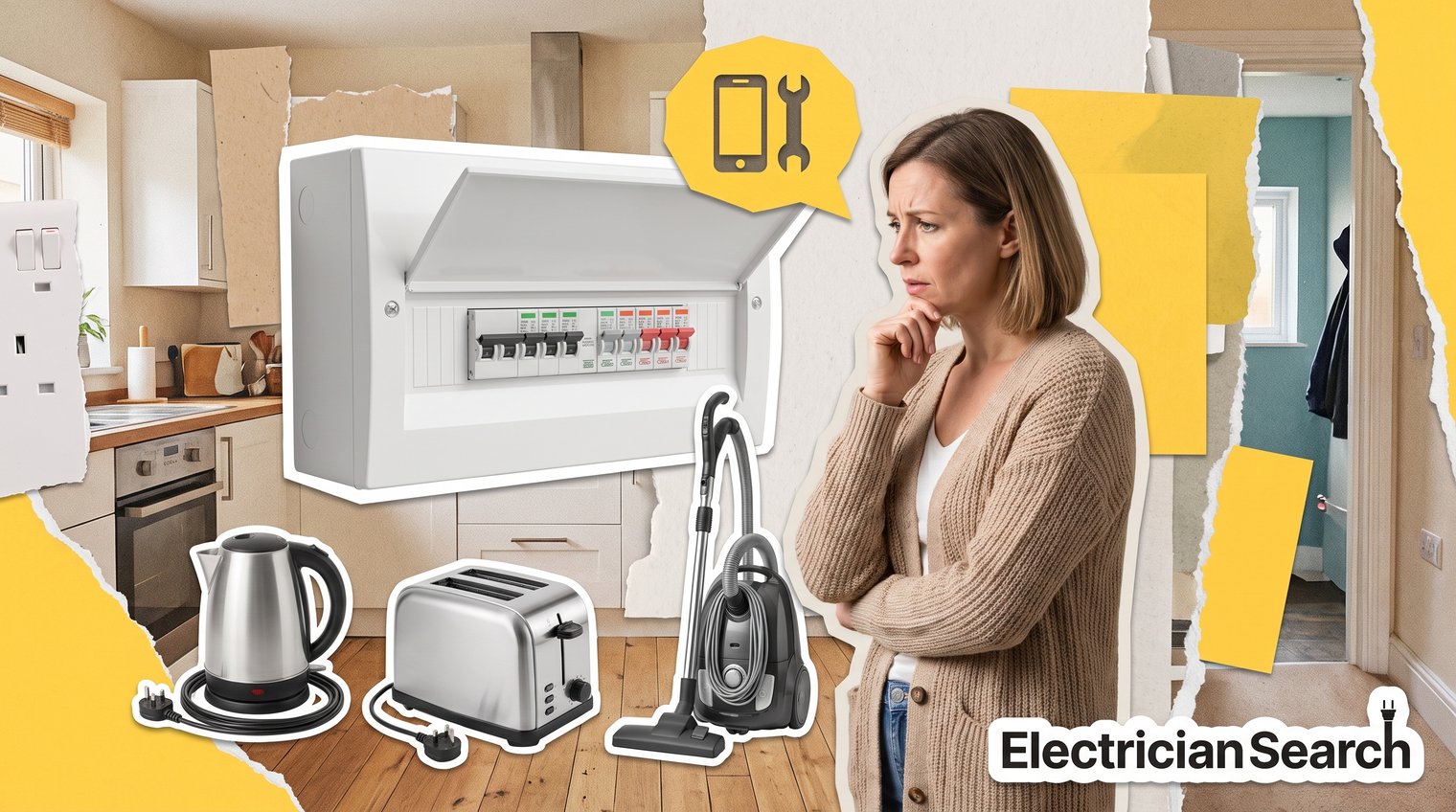
What causes a circuit breaker to keep tripping?
The common causes fall into three broad groups: too much demand on a circuit, a problem with a plug-in appliance, or a fault in a socket, cable, fixed appliance or wiring. A repeated trip is evidence that something needs attention, but it does not prove the exact cause without proper testing.
An overloaded circuit
An overload happens when appliances draw more current than the circuit is designed to supply. It is most likely when several high-wattage items run at once: for example, a kettle and toaster in a kitchen, or a portable heater, iron and tumble dryer used on related circuits.
Portable electric heaters are frequent culprits because they use substantial power continuously. High-power kitchen appliances can also trigger an overload, but there is no single device that is always responsible. The circuit layout, its rating and the condition of the equipment all matter.
If the trip occurred while several appliances were operating, reduce the load before resetting once. Avoid solving the issue with extension leads or by moving a high-demand appliance around the house; that can simply shift the problem elsewhere.
A faulty appliance or damaged lead
If your breaker keeps tripping when you plug something in, that item, its lead, plug or the socket may be at fault. Frayed flexes, crushed cables, damaged plugs, moisture and internal appliance faults can all create a condition that causes protective devices to operate.
Leave the suspect appliance unplugged. Do not keep trying it in different sockets to see whether it works there, particularly if it has already caused a trip. Arrange a repair or replacement as appropriate, and call an electrician if the circuit continues to trip after that appliance has been removed.
A short circuit, earth fault or wiring fault
A short circuit or earth fault can occur when damaged insulation, loose connections or faulty components allow electricity to take an unintended path. That may involve a socket, light fitting, cable, fixed appliance or connection hidden within the installation.
Yes, a bad outlet can cause a breaker to trip. A socket that is loose, cracked, discoloured, warm, buzzing or intermittently working should be left alone and inspected by an electrician. Do not open it, tighten connections or attempt a repair yourself.
Water or weather-related electrical faults
If your electric keeps tripping when it rains, take that pattern seriously. Water ingress can affect outdoor sockets, garden lighting, garage circuits, exterior cabling and equipment in sheds or outbuildings. A roof leak or damp wall can also affect wiring or fittings indoors. If a leak may have affected the installation, see this guide to an electrician after a water leak electrical check.
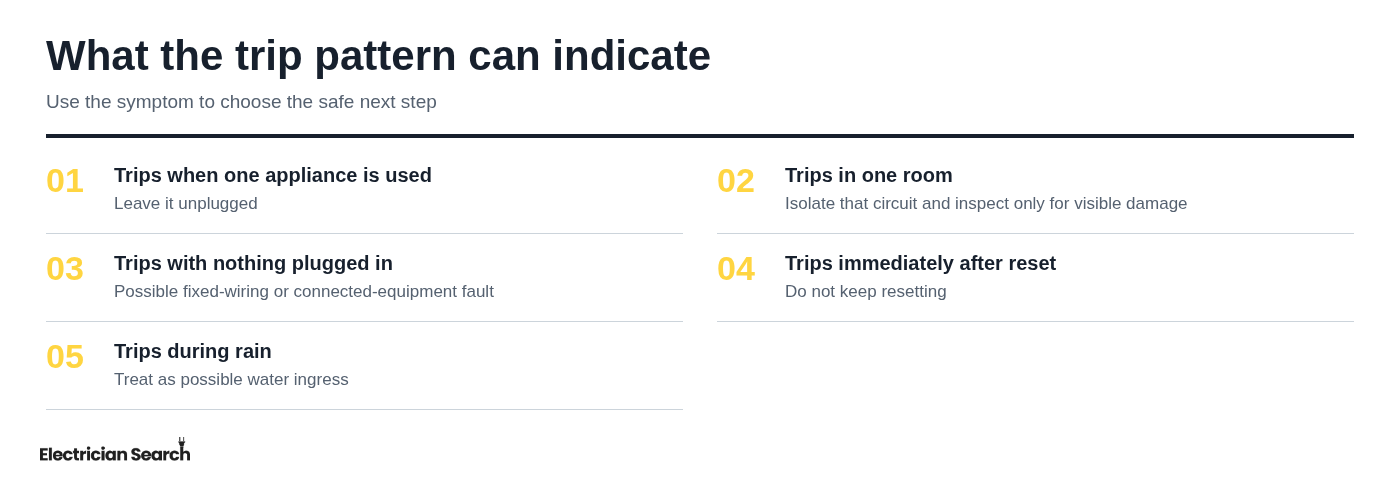
Isolate the affected circuit where safe and do not use outdoor electrical equipment until it has been checked. Rain-linked trips are a strong reason to call an electrician, especially where there is visible dampness, standing water or signs of damage.
The tripping pattern tells you how urgent the problem may be
The timing and location of a trip can help an electrician narrow down the fault. It should guide your next safe action, not encourage you to diagnose or repair electrical work yourself.
It trips when you plug something in
When a trip happens as soon as a particular appliance is plugged in or switched on, the appliance, its plug or lead is a likely starting point. Unplug it and leave it disconnected.
If the breaker still trips after all appliances are unplugged, or if another item causes the same socket or circuit to trip, the problem may be with the fixed installation. An electrician should investigate rather than relying on further reset attempts.
It trips in one room
A trip that affects one room may indicate a fault on that circuit, but do not assume only the visible sockets in that room are connected. The same circuit may supply lights, nearby areas, an extractor fan, a boiler control, outdoor equipment or another fixed load.
Make a note of what stopped working, what was in use at the time and whether any lights flickered beforehand. For more guidance, see when to call an electrician about flickering lights. This practical detail can save time during fault finding.
It trips with nothing plugged in
A breaker can trip even when nothing appears to be plugged in. Fixed wiring and permanently connected equipment may still be live, including lighting circuits, immersion heaters, outside circuits, extractor fans, alarms and appliances connected behind cupboards or panels.
Recurring or intermittent trips with nothing plugged in usually need professional fault finding. The issue may only show itself when a light is switched, a timer operates, equipment heats up or damp conditions change.
When to call an electrician immediately
Call an electrician promptly if the breaker will not reset, trips instantly, or repeatedly trips after basic isolation checks. You should also stop using the affected circuit and seek help if you notice any warning signs of overheating or damage.
- Burning smells, smoke or scorch marks
- Warm, loose, cracked or discoloured sockets and switches
- Buzzing, crackling, sparking or tingling from electrical fittings
- Water ingress, dampness near electrics or rain-related tripping
- Visible cable damage
- Loss of power affecting essential equipment or safety systems
Call 999 if there is an active fire, smoke creating immediate danger, or anyone is at risk, and do not approach unsafe equipment. If the area is safe to leave isolated, such as with suspected wiring damage or water ingress without an active fire, keep the affected circuit off and arrange an urgent electrician visit.
The eventual cost depends on factors such as the time of the call-out, access to the fault, the diagnostic time required and the repair needed. A genuine electrical fault cannot be priced accurately from the symptom alone.
What an electrician will check and repair
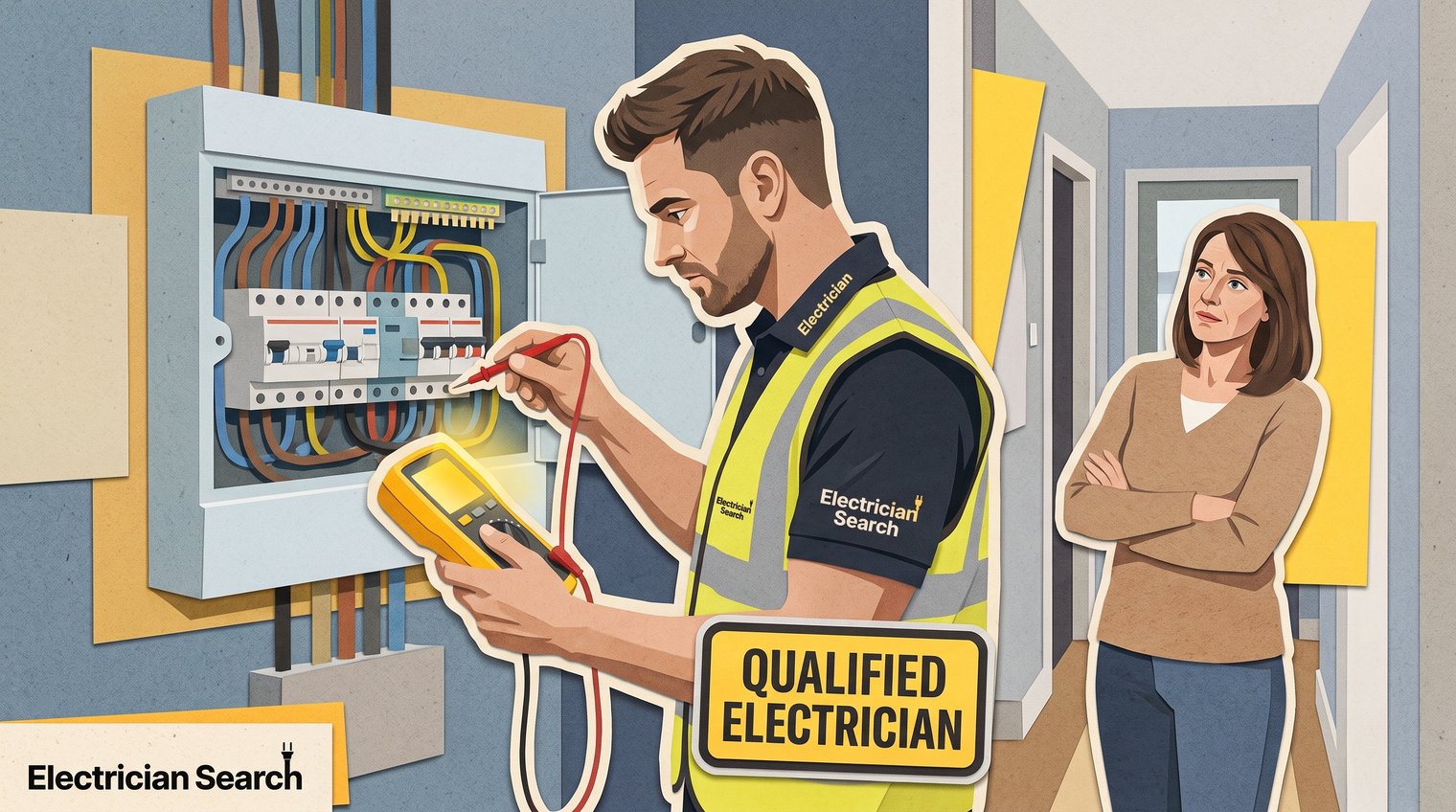
An electrician will first identify which circuit and protective device are operating, then use suitable test equipment to find the source of the fault. This may include testing insulation, checking protective devices, inspecting accessible sockets and connections, and isolating appliances or fixed equipment in a controlled way.
The repair could be relatively contained, such as replacing a damaged accessory or faulty connection. In other cases, the work may involve repairing cable damage, resolving water ingress, correcting a circuit-capacity issue or dealing with a fault in fixed equipment. The right repair depends on what testing reveals.
Before the visit, note the pattern: when it trips, which rooms lose power, whether rain or damp conditions are involved, what appliances were running and whether any electrical work has recently taken place. Those details are often more useful than repeatedly trying to reproduce the fault.
Avoid these common mistakes while the fault is unresolved
The most common mistake is repeatedly resetting the breaker in the hope that it will stay on. Protective devices are not tripping to be inconvenient; they are responding to a condition that may become unsafe if power is repeatedly restored.
- Do not fit a larger-rated breaker to stop trips.
- Do not bypass RCD or RCBO protection.
- Do not remove the consumer-unit cover or work on internal connections.
- Do not continue using an appliance that appears to trigger the trip.
- Do not ignore warm fittings, damaged cables, dampness or burning smells.
There is no safe number of times a breaker can trip before the situation becomes worth addressing. The important issue is the pattern: a repeated trip is not normal household behaviour to accept. Keep the suspect circuit switched off until the cause is identified.
Find the right help for a repeatedly tripping breaker
A repeatedly tripping breaker deserves investigation, not workarounds. Disconnect appliances safely, reset the protective device no more than once after isolation, and leave the circuit off if it trips again or any danger signs are present.
For persistent tripping, suspected wiring faults, water-related problems or a breaker that will not reset, use ElectricianSearch to find a nearby registered electrician for household electrical fault finding. When comparing local listings, look for relevant electrical fault-finding experience, availability and applicable inspection or repair details. After the work, you can also check what certificate an electrician should provide after work.