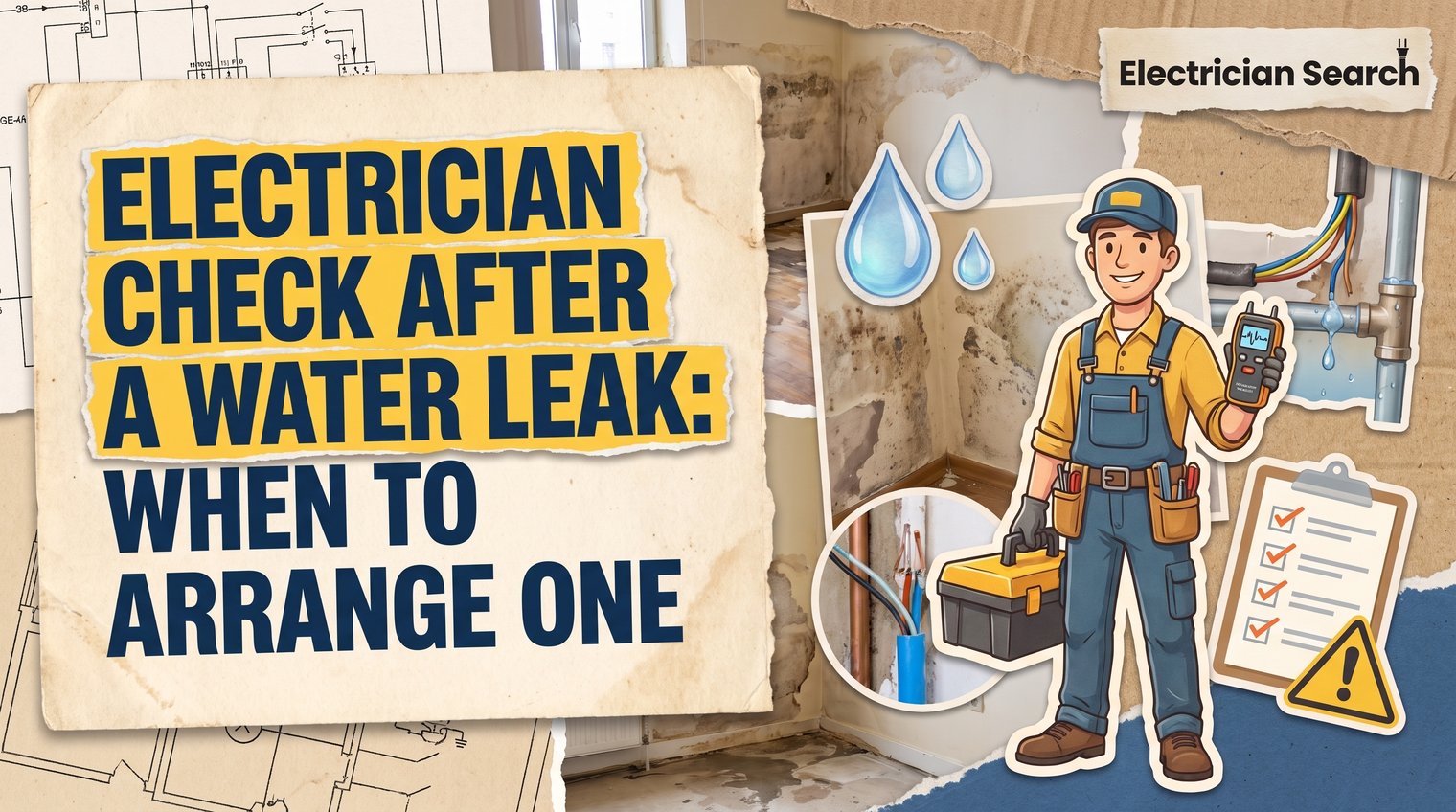
Yes: arrange an electrician check promptly if a water leak has reached, or may have reached, wiring, sockets, light fittings, appliances or the consumer unit. Do not turn affected circuits back on just because the wall, ceiling or floor now looks dry.
A small leak that was fully contained well away from electrical equipment may not need an inspection. But if there is any doubt about where the water travelled, treating it as an electrical safety issue is the sensible choice.
Arrange an electrical check promptly if water may have reached wiring, sockets or equipment
Water and electricity are a dangerous combination, including after the obvious leak has stopped. If water has entered an electrical accessory, run through a ceiling containing light wiring, soaked a wall with cables inside it, or collected near electrical equipment, keep the affected supply isolated and arrange an inspection by a qualified electrician.
Visible dryness is not a reliable safety test. Water can travel along cable routes, through wall cavities and ceiling voids, or inside fittings where it is not obvious from the room below.
There is an important distinction between a minor spill contained on a kitchen worktop far from sockets and a leak from a pipe above a ceiling light. In the first case, there may be no effect on the installation. In the second, the fitting and associated circuit may have been exposed even if the room appears dry a day later.
Treat these signs after a leak as urgent
Contact an emergency electrician when water is close to live electrical equipment or there are signs that the installation has been affected. Do not wait for a routine appointment if water is around a consumer unit, socket, switch, light fitting, appliance, exposed cable or extension lead.
Warning signs include:
- RCDs, breakers or fuses tripping after the leak
- Flickering lights or intermittent loss of power
- Buzzing, crackling or unusual sounds from fittings
- A burning smell, electrical smell, smoke or heat from an accessory
- Scorch marks, discolouration or visible water inside a fitting
- A tingling sensation from an appliance, tap or metal fitting
Never touch wet electrical equipment, attempt to unplug an appliance standing in water, or investigate a consumer unit if the surrounding area is wet. If there is fire, smoke, arcing or an immediate risk to people, move away if it is safe to do so and call the emergency services.
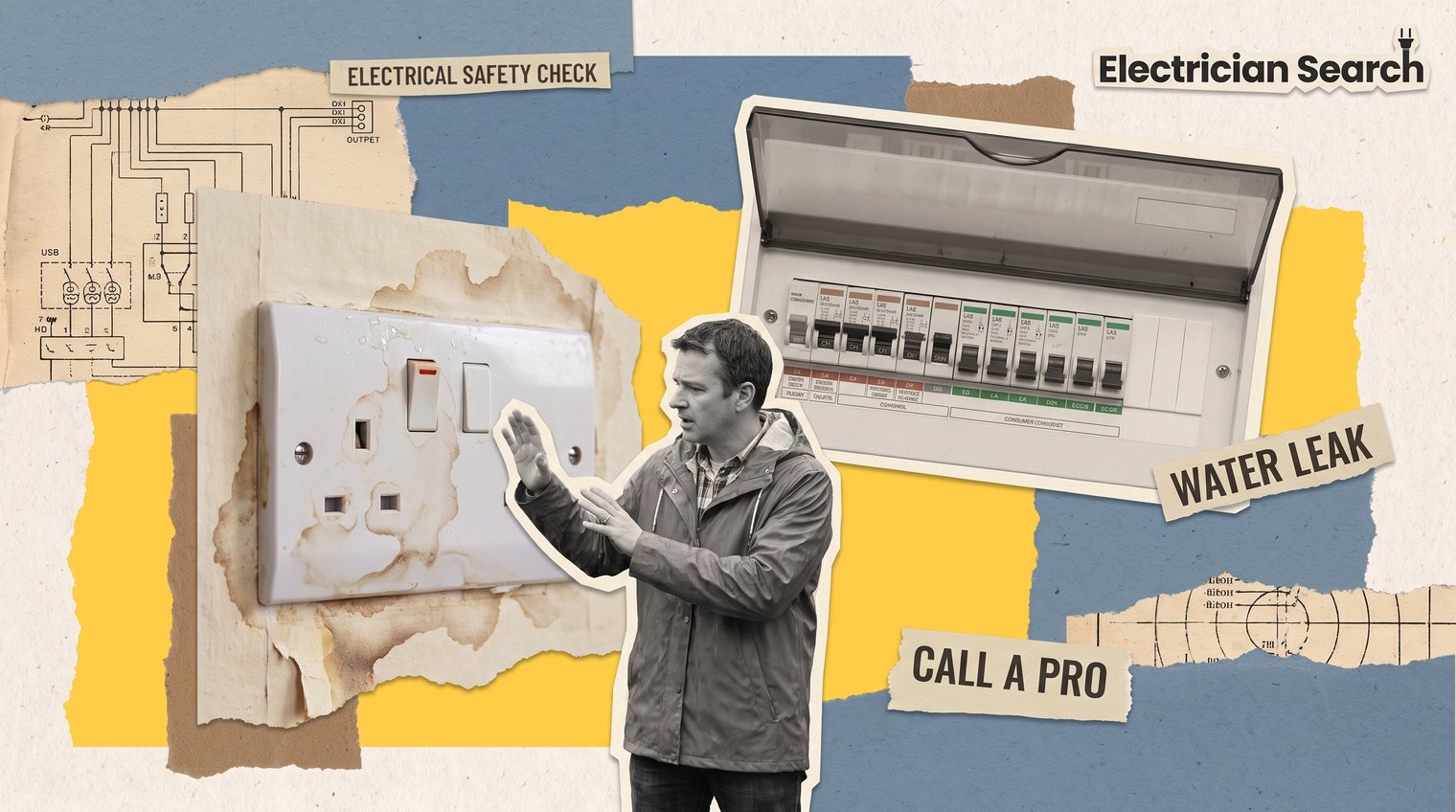
What to do safely before the electrician arrives
Your first priority is to stop the water and prevent anyone from coming into contact with affected electrical items. Only take action that can be done without entering a wet area or handling damaged equipment.
- Stop the source of water if it is safe, such as turning off an accessible isolation valve or the main water supply.
- Keep children, pets and other occupants away from the affected area.
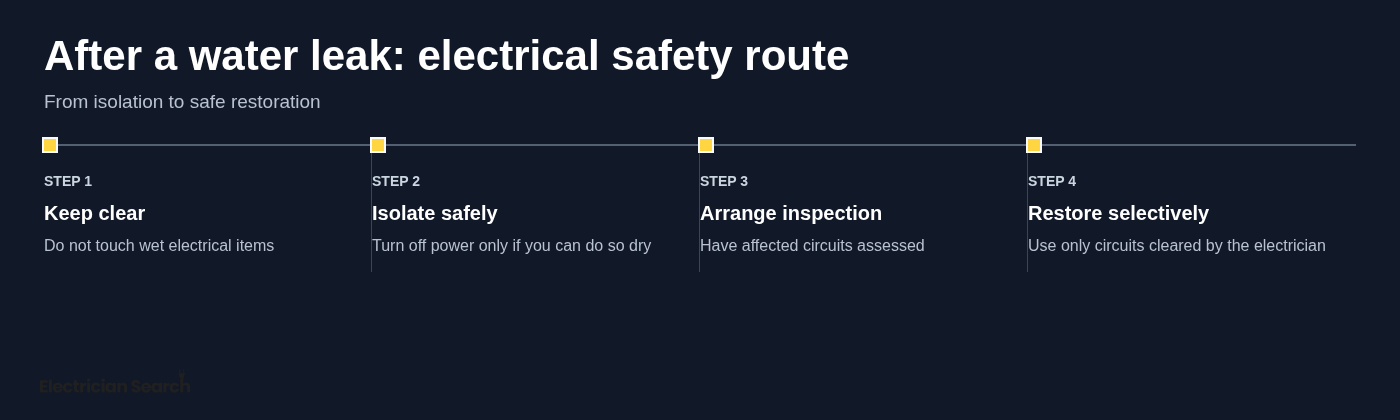
- Isolate electricity only if you can reach the consumer unit and switches without walking through water or touching wet surfaces.
- Leave affected circuits off. If you cannot isolate safely, keep clear and seek urgent professional help.
- Take photographs of the leak path, damaged fittings and visible water damage once it is safe to do so.
Do not use a hairdryer, portable heater, fan heater or extension lead to dry an affected socket, switch, light fitting or consumer unit. Do not remove faceplates, open electrical equipment or try to test whether a circuit "still works." Those actions can turn hidden damage into an electric shock or fire risk.
A plumber may need to repair the pipe, roof, tank or appliance causing the leak, but that repair does not establish that the electrical installation is safe. Tell your insurer or landlord early where appropriate, particularly after substantial water damage. If you rent, report the issue promptly and keep a record of what happened.
Why drying out does not prove an electrical installation is safe
Dry walls and ceilings do not necessarily mean dry electrical components. Moisture can remain behind socket fronts, inside ceiling roses, in junction boxes, around cable connections and within a consumer unit long after the visible signs of a leak disappear.
Water exposure can also start corrosion at terminals and connections. That may not cause an immediate failure; instead, a circuit might begin tripping later, a fitting may operate intermittently, or a poor connection may overheat under load.
Not every leak damages electrical wiring. A brief, contained leak may leave no electrical issue at all. The point of a professional inspection is to establish the actual condition rather than relying on appearance, timing or a breaker that happens to reset once.
What an electrician checks after water damage
An electrician will assess the extent of water exposure, identify the circuits involved and decide whether equipment can be safely tested, dried, repaired or replaced. The scope depends on the path of the water, how long it was present and whether mains-voltage equipment was directly affected.
Typical work may include inspecting sockets, switches, light fittings, appliance connections, cable routes and the consumer unit for moisture, contamination or corrosion. The electrician may also test circuit integrity and protective devices, including the RCD where applicable, to determine whether the installation can operate safely.
Where water has entered an accessory or electrical enclosure, replacement may be more appropriate than attempting to dry and reuse it. In other cases, the electrician may recommend that a circuit remains isolated while the building fabric dries, followed by further testing before it is restored.
Expect clear boundaries rather than a blanket assurance. A good post-leak assessment identifies which circuits are safe to use, which must stay off, and what remedial work is needed.
Which water leaks need an electrical inspection?
An electrical inspection is strongly advisable whenever water has entered an area where electrical circuits, fittings or equipment may be present. The leak does not need to be dramatic to justify a check.
- Water through a ceiling with a light fitting: water may have reached the fitting, cable connections or the circuit above.
- Flooding near sockets or appliances: even shallow water can create risk if it reaches plugs, outlets or appliance connections.
- Water near a consumer unit: treat this as urgent, particularly if water has entered the enclosure or run down the wall behind it.
- A burst pipe in a wall, floor or ceiling: concealed wiring may be in the same void as the damaged pipework.
- A roof leak near loft wiring or upstairs lighting: water can travel before it becomes visible indoors.
- Overflowing tanks, bathrooms or washing machines: nearby circuits, extractor fans, underfloor wiring and appliance connections may be affected.
Clean water is not automatically harmless to electrical equipment. Sewage, floodwater and dirty standing water introduce an added contamination problem and can make replacement of affected accessories more likely. A plumber fixing the source is essential, but it is not a substitute for electrical assessment.
When can power be switched back on?
Affected circuits should be switched back on only after a competent electrician has judged them safe, especially if water reached sockets, lighting points, electrical enclosures or distribution equipment. Do not use the circuit as a test of whether it has dried out.
Unrelated circuits may sometimes remain usable if they are clearly separate from the water-damaged area and have been safely assessed. Homeowners should not make that call through trial and error, particularly where wiring routes are concealed.
It is tempting to reset a tripped breaker after a leak. Avoid repeatedly doing this. A breaker or RCD that trips may be responding to moisture, insulation damage or a fault on the circuit. Repeated resetting can reintroduce a hazard rather than solve the problem.
What paperwork should the electrician provide after the work?
The paperwork depends on what the electrician has inspected, tested and repaired. There is not automatically a formal certificate for every emergency call-out, so ask what written findings and documentation the work requires.
An inspection may result in a condition report setting out observations, test results and any recommended remedial work. If qualifying installation work is completed, an Electrical Installation Certificate may be appropriate. For certain smaller alterations or repairs, a Minor Electrical Installation Works Certificate may be issued. See What Certificate Should an Electrician Provide After Work? for more detail.
Keep the report, certificates, test results, invoice and photographs of the damage. These records can help with an insurance claim, communication with a landlord or managing agent, and future maintenance decisions.
How to find the right electrician for a post-leak check
Look for a suitably qualified and insured electrician who can assess domestic electrical installations affected by water. Ask what qualifications, insurance and relevant registration or competent-person scheme membership they hold. Explain that this is a post-leak safety check, not simply a request to replace a light fitting or reset a breaker.
When booking, give useful details upfront: where the leak began, where water was seen, whether it came through a ceiling or wall, which sockets or lights are nearby, whether power tripped, and whether water is still present. This helps the electrician judge urgency and arrive prepared for the likely testing work.
Ask about availability, the likely inspection scope and whether written findings will be provided. A local directory can make it easier to find an electrician near you; ElectricianSearch lists local electrical providers to contact. But where there is active danger, smoke, fire or water around live equipment, prioritise emergency action over comparison shopping.
Make the electrical check part of a safe recovery
The decision rule is simple: if water reached, or might have reached, electrical equipment or wiring, isolate power safely and arrange a professional assessment before using affected circuits. A dried surface, repaired pipe or reset breaker is not proof that the electrical installation is safe.
Once the immediate risk is under control, use ElectricianSearch to locate a nearby registered electrical professional for a post-leak inspection.