
An electrician does far more than replace a light fitting or add a socket. They install, inspect, test, maintain and repair electrical systems so a home can use electricity safely and reliably. If you have a fault, are planning an alteration or are unsure whether an older installation is safe, a qualified electrician is the right person to assess the whole picture.
In a UK home, that can mean anything from tracing a circuit that keeps tripping to planning a kitchen rewire, testing a consumer unit or issuing documentation after completed work. The visible fitting is often only one small part of the job.
What an electrician does, in plain terms
Electricians work on the fixed electrical installation in a property and the equipment connected to it. Their work commonly includes wiring, consumer units, sockets, switches, lighting, extractor fans, protective devices, appliances, fault-finding and electrical safety testing.
For a homeowner, the practical point is that an electrician does not simply "fix the broken thing." A dead socket, flickering light or repeatedly tripping circuit may be caused by a problem elsewhere on the circuit. A competent electrician investigates the cause, carries out the necessary repair or installation, and verifies that the work is safe.
They may also provide inspection reports and certificates following certain work or testing. These records matter when you are maintaining the property, selling it, letting it, or simply want evidence of the installation's condition.
The electrical systems an electrician works on
A domestic electrical installation is a connected system. Electricity enters the property through the supply arrangement, is distributed through the consumer unit, and travels along separate circuits to lighting, sockets, cooking equipment and other fixed services.
An electrician may work with the consumer unit and its protective devices, circuit cables, switches, socket outlets, junctions, lighting points, earthing and bonding arrangements. Each part has a role in delivering power and helping protect people and property if something goes wrong.
That is why a failed fitting should not always be treated as an isolated item. For example, replacing a socket without checking the circuit, cable condition or protective device can miss the reason it failed in the first place. Likewise, adding a new shower, oven or garden supply can affect circuit capacity and protection elsewhere in the home.
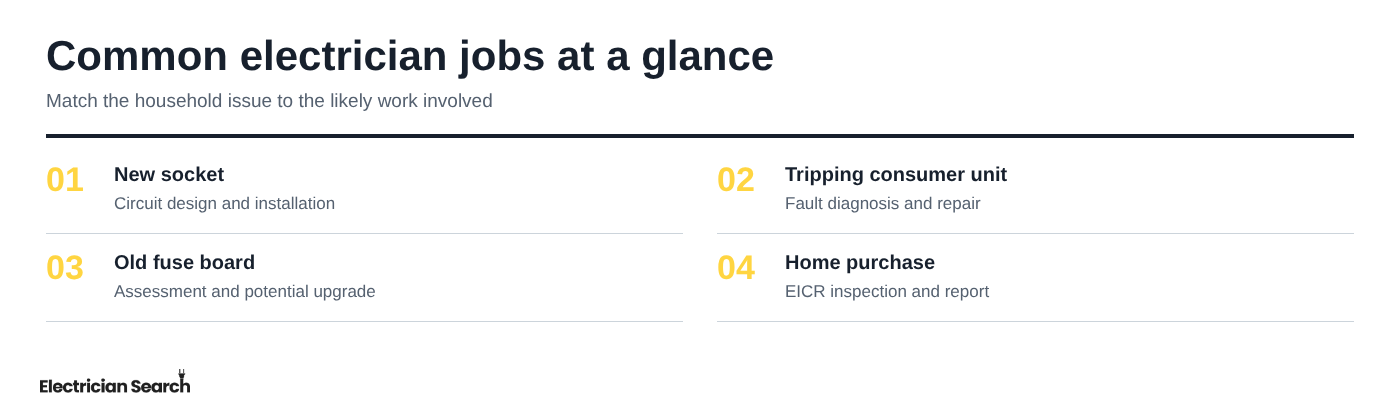
Common jobs electricians carry out in UK homes
Most household electrical jobs fall into four broad groups: installation, upgrades, fault repairs and inspection. The right approach depends on the property's age, the condition of existing wiring, the circuit involved and whether the work needs to be tested or documented.
Installing and upgrading electrical fittings
Electricians install new sockets, switches, ceiling lights, wall lights, extractor fans, smoke alarms and outdoor power. They also carry out electrical additions during kitchen, bathroom, loft-conversion and extension projects.
Adding an accessory is not always a quick swap. A new socket may require a suitable cable route, enough capacity on the existing circuit and appropriate protection. Bathroom and outdoor work can bring additional location-specific considerations, while an extractor fan may need electrical work coordinated with ventilation and building work.
A good electrician will assess the proposed location and circuit before committing to the simplest-looking solution. That is especially important where the property has older wiring or previous alterations of uncertain quality.
Consumer unit, circuit and wiring upgrades
Electricians replace consumer units, add new circuits, carry out partial rewires and complete full rewires where an installation is outdated or in poor condition. They may also correct defects found during an inspection, such as unsuitable connections, inadequate earthing or damaged cables.
An old fuse board is not automatically dangerous, and a new-looking consumer unit does not prove that every circuit in the property is sound. The installation should be assessed as a system. A replacement unit may expose issues with legacy wiring that need to be addressed before the new protective devices can perform as intended.
Rewiring is more disruptive than many homeowners expect because cables are often concealed in walls, floors and ceilings. It is worth agreeing access, making-good responsibilities and the extent of any redecorating before work starts.
Finding and repairing electrical faults
Fault-finding is one of the most valuable things an electrician does. Typical call-outs include a circuit that repeatedly trips, sockets that have stopped working, flickering lights, an appliance connection that overheats, damaged cables and intermittent power loss.
The process usually involves making the area safe, inspecting the relevant equipment and testing the circuit to narrow down the cause. The electrician can then repair or replace the faulty part and test again to confirm the circuit is operating correctly.
Do not assume repeated tripping means the consumer unit itself is faulty. It can be doing its job by disconnecting power because it has detected a problem on a circuit or in connected equipment. Resetting it repeatedly without finding the cause is not a repair.
Electrical inspections, testing and certification
Electricians also inspect installations and provide Electrical Installation Condition Reports, often called EICRs. An EICR is a structured assessment of the installation's condition at the time it is inspected, identifying observations that may need attention.
Testing is also normally part of new installation work and significant alterations. Keep any certificate, report, invoice and circuit information supplied after the job. For more detail, see this guide to what certificate an electrician should provide after work. These documents can be useful for future electricians, insurers, buyers and property management.
An inspection report is not a lifetime guarantee that nothing can ever fail. It is evidence of what was found and tested on the inspection date, within the scope of the work agreed.
What does an electrician do on a daily basis?
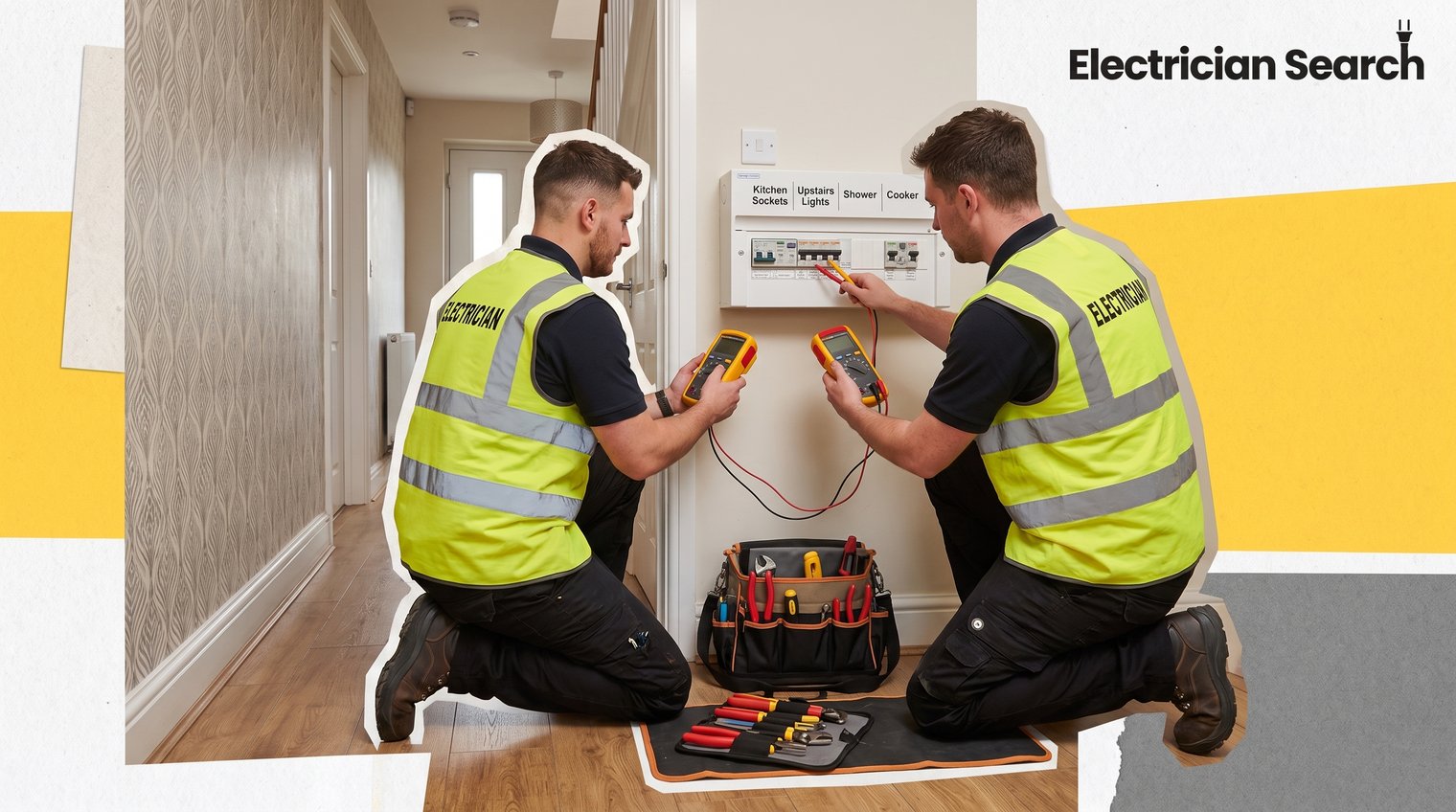
On a typical day, an electrician reviews the job details, makes the work area safe, inspects the installation, completes testing where needed, carries out the planned work and records the result. The exact routine varies sharply between a booked installation, a maintenance visit, an inspection and an urgent fault call-out.
For planned work, much of the day may be spent measuring routes, installing cables and accessories, coordinating with other trades, and testing completed circuits. A kitchen renovation, for example, can involve moving sockets, adding appliance supplies, fitting lighting and ensuring the finished layout works with the rest of the installation.
On a fault call-out, diagnosis takes priority. The electrician may need to establish which circuit is affected, identify whether the issue is in fixed wiring or connected equipment, and decide what can be safely restored that day. Documentation and clear communication are part of the job, not an optional extra.
When to hire an electrician rather than attempt a DIY fix
Call an electrician when there is any sign of electrical danger, when the issue involves fixed wiring, or when you do not know why a circuit has failed. Electrical faults can be hidden behind a socket, under a floor or within a connection, so a problem that appears minor can have a more serious cause.
- Electric shocks, tingling or a buzzing sensation from fittings or appliances
- Heat, scorch marks, discolouration or melted plastic around sockets, switches or plugs
- Burning smells, smoke, sparks or a crackling sound
- A consumer unit or circuit that keeps tripping
- Water near electrical equipment or a leak affecting electrical circuits
- Damaged, exposed or chewed cables
- Loss of power to sockets, lighting or a fixed appliance circuit
- Any work that requires altering fixed wiring or adding a circuit
If there is smoke, fire or immediate danger, move away from the area and seek urgent help. Do not touch exposed conductors or damaged equipment. Only isolate the supply if it is safe to do so; do not take risks to reach a consumer unit or switch.
Why testing and safety checks are part of the job
Testing is what turns an installation or repair from a plausible fix into work that has been checked. Electricians use inspection and test results to confirm, at a non-technical level, that conductors are correctly connected, insulation is in acceptable condition and protective devices can respond as intended.
Checks may cover continuity, insulation resistance, polarity, earthing and the operation of protective devices. The precise tests depend on the work and the condition of the installation, but the principle is consistent: electrical safety cannot be judged reliably by appearance alone.
UK electrical requirements and notification arrangements can depend on the type of work and where the property is located. For that reason, discuss testing, certification and any relevant building-control process with the electrician before the job begins rather than assuming all electrical work is treated the same way.
How to choose the right electrician for your job
Choose an electrician whose experience matches the work you need, not simply the lowest initial quote. A specialist fault diagnosis visit, a consumer unit upgrade and a full rewire each require a different level of planning and may have very different testing and documentation requirements.
Describe the issue clearly when making contact. Mention when the problem started, which rooms or circuits are affected, whether anything has changed recently, and any warning signs such as heat, burning smells or repeated tripping. For planned work, provide photographs, a rough layout and details of major appliances where possible.
- Ask whether they regularly carry out similar work.
- Request a written scope or estimate that explains what is included.
- Confirm insurance and discuss expected timescales.
- Ask what testing will be completed and what paperwork you will receive.
- For relevant work, check registration with an appropriate competent-person scheme.
- Compare the scope of quotes, not only the final price.
A lower quote may exclude fault investigation, making good, upgraded materials, certification or work that becomes necessary once the installation is opened up. For help comparing likely charges, see how much it costs to hire an electrician in the UK. Clarifying those points early avoids an unfair comparison.
Questions to ask before work begins
A short conversation before the start date can prevent most misunderstandings. Ask direct questions and make sure the agreed scope is recorded in writing, particularly for upgrades and renovation work.
- What work is included, and what is specifically excluded?
- Will the existing circuit or installation be assessed before work proceeds?
- What testing is planned after the work is completed?
- What certificate, report or other paperwork will be supplied?
- Are access arrangements, lifting floors, chasing walls or making good included?
- How will additional faults or unforeseen work be priced and approved?
- Will there be periods without power, and how long are they likely to last?
- For a larger project, is an EICR or circuit assessment needed before a final quote is given?
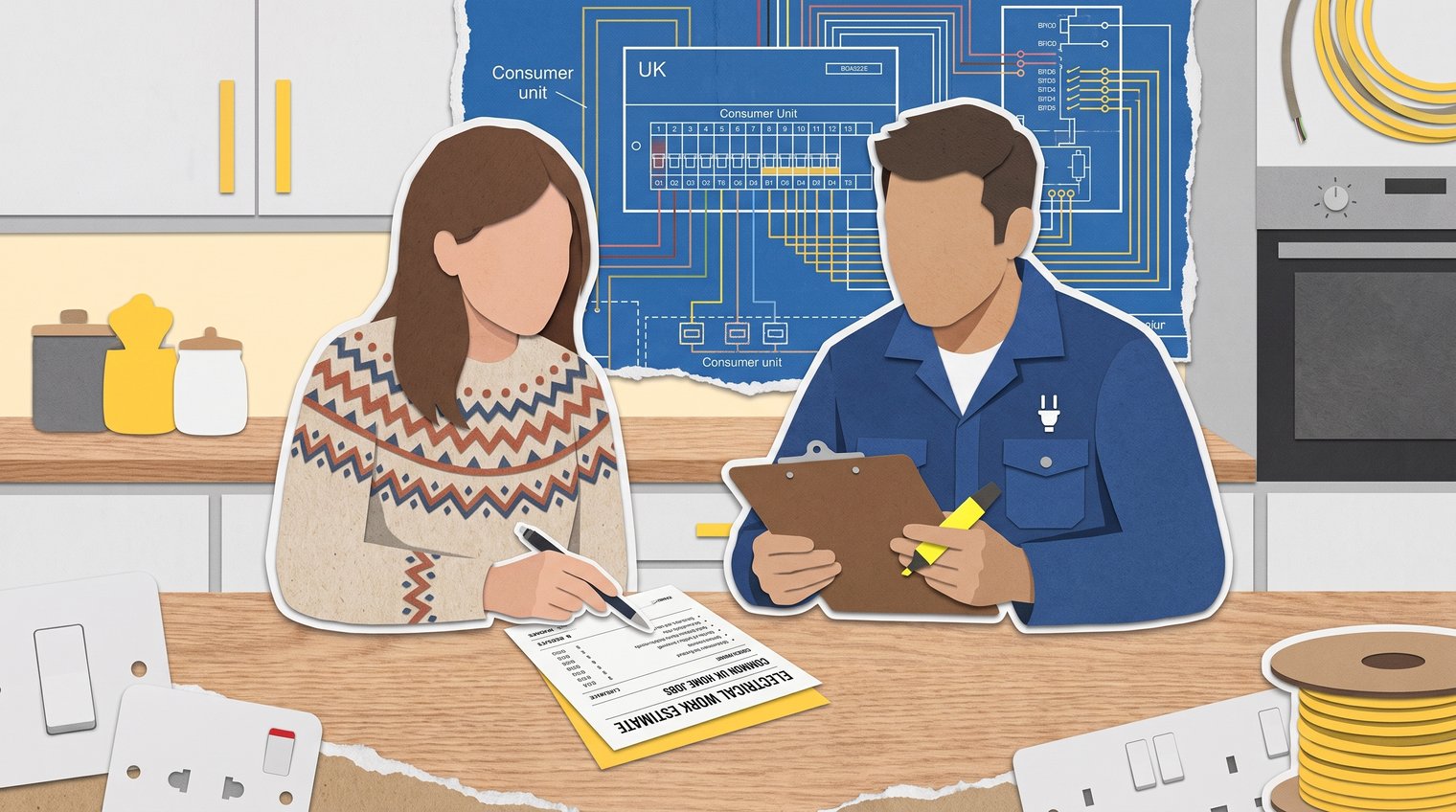
Knowing when to call a local electrician
Electricians do more than fit visible accessories. They assess the system behind them, protect against electrical hazards, locate faults, repair damaged circuits and verify that completed work performs as it should.
If you need help with a home electrical problem, an installation or an inspection, start by describing the job clearly and choosing someone with relevant experience. You can use ElectricianSearch to browse local electrician listings and contact a nearby provider.