A mains smoke alarm replacement is usually a job for a qualified electrician, especially if the alarm is hard-wired, interconnected with other units, or showing signs of a circuit fault. A simple alarm-head change can sometimes be straightforward, but only when the existing base, wiring and replacement unit are genuinely compatible.
The important point is that a ceiling-mounted mains alarm is part of your home's electrical installation and fire-warning system. Before booking, make sure the electrician understands the model, the fault and whether other alarms are linked to it.
When to call an electrician for a mains smoke alarm replacement
Call an electrician when you need to replace a hard-wired smoke alarm, particularly if the work may involve its mounting base, fixed wiring, interlink cable or power supply. This is also the sensible route if more than one alarm is sounding, a unit has no power indicator, or you are unsure whether the replacement you have bought will fit the existing connection.
A like-for-like alarm-head swap may be possible where the existing base is in good condition and the manufacturer confirms compatibility. However, alarm heads that look nearly identical are not necessarily interchangeable. Different ranges can use different bases, connectors and interlinking arrangements.
Do not assume that switching off a nearby light circuit makes the work safe. The alarm may be supplied from another circuit, and the condition of the wiring cannot be judged from the outside of the unit. An electrician can isolate the supply correctly, inspect the connection and test the system once the replacement is fitted.
Why mains-powered alarms need more than a battery change
Replacing a backup battery and replacing the alarm itself are different jobs. Many mains-powered smoke alarms have a battery or sealed backup battery to keep the alarm operating during a power cut, but the main unit is still powered from the fixed electrical supply.
If the alarm gives an occasional low-battery warning, the backup battery may be the issue. If it is reaching the end of its stated sensor life, fails its test function, has been damaged, repeatedly sounds without an obvious cause, or displays a fault indicator, the alarm unit may need replacing instead.
Many domestic alarms are designed with a sensor life of around 10 years, although the correct replacement point depends on the product instructions and its installation date. End-of-life chirps are easy to mistake for a battery problem, which is why checking the label and model information matters before ordering a replacement.
Recurring faults deserve attention rather than repeated silencing. Dust, insects, moisture, poor connections, power interruptions and interlink faults can all affect performance. The safest answer is not to guess from the sound alone, but to have the installation assessed if the warnings continue.
What to ask before booking a mains smoke alarm replacement electrician
A useful enquiry gives the electrician enough information to judge whether they are likely dealing with a direct replacement or a wider system issue. Ask what they need from you before the visit, then make sure the written quote describes what is included.
Have the following details ready when you call or send an enquiry:
- The alarm brand and model number, if visible.
- The number of alarms in the property and their locations.
- Whether pressing test on one alarm activates the others.
- What the alarm is doing: chirping, beeping, sounding continuously, showing no light or failing a test.
- The approximate age of the unit and whether its backup battery has been changed.
- The property type, such as a house, flat, rental property or converted building.
Are you qualified to work on domestic fixed wiring?
Ask whether the electrician is competent to assess and work on domestic fixed wiring, rather than relying on a general claim of experience. A professional should inspect the circuit and installation before deciding what replacement work is needed and whether any certification or records apply.
This does not mean every alarm change will involve extensive electrical work. It means the person doing it should be able to recognise when a simple replacement is appropriate and when damaged connections, unsuitable wiring or a circuit issue needs further attention. For context on the types of work electricians commonly carry out in UK homes, see What Does an Electrician Do? Common UK Home Electrical Jobs.
Can you check compatibility before fitting a replacement?
Yes, this is one of the most worthwhile questions to ask. Alarm heads and mounting bases are often specific to a manufacturer or product range, even if the units have a similar shape and size.
Ask whether the electrician can confirm if a compatible replacement head can be fitted to the current base. If not, find out whether the work will require a new base, changes to the wiring, or replacement of other linked alarms with a matched set.
For example, replacing one ageing alarm in a network may not be as simple as changing the unit if the remaining alarms use an older interlinking system. Compatibility should be checked before the appointment becomes an unexpected upgrade project.
Will you test every interconnected alarm after the work?
Any linked alarms should be tested as a system after the replacement. It is not enough for the new unit to power on or sound when its own test button is pressed; the electrician should confirm that the linked alarms respond as intended and that fault indications are not left behind.
Ask what happens if the alarms sound unexpectedly, fail to trigger together or continue to chirp after the new unit is installed. A clear answer shows that the quote covers diagnosis and testing, not just fitting a device to the ceiling.
What certification, records, and waste handling are included?
Ask what paperwork is appropriate for the actual scope of work and whether it is included. The answer will vary depending on what is found and what electrical work is required, so avoid treating every replacement as identical.
The written quote should state the labour, alarm unit or units, testing, any call-out charge and VAT. It is also sensible to confirm that old alarms will be removed and disposed of appropriately, particularly if several units are being upgraded at once.
Information to give the electrician before they arrive
Good information can prevent a wasted visit and improve the chance that the electrician arrives with suitable replacement options. Do not remove covers or disturb wiring to gather it; provide only what you can see safely.
- Photos of the front of the alarm and its labels, where safely visible.
- The model number, installation date or approximate age if known.
- A description of the warning pattern, including when it happens.
- Whether another alarm activates when this one sounds or is tested.
- Any recent power cuts, decorating work, leaks, condensation or building work nearby.
- Access details, including high ceilings, stairwells, tenants, pets and parking restrictions.
- Times when a full audible alarm test can be carried out without causing unnecessary disruption.
If you live in a flat or managed building, mention that early. There may be access arrangements, shared-system considerations or building rules that affect the appointment.
What happens during a professional replacement visit
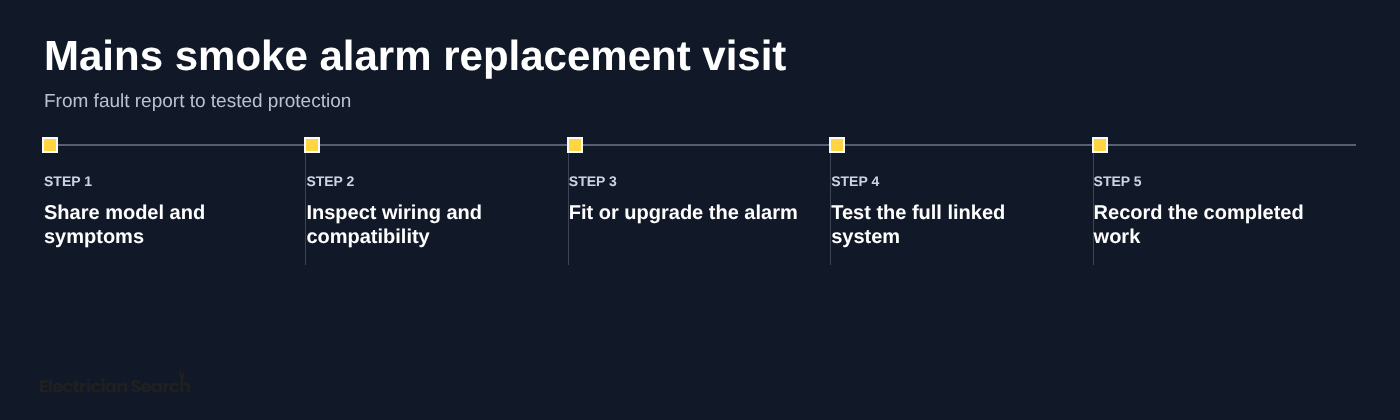
A proper visit should begin with safe isolation and inspection, not immediate removal of the old alarm. The electrician will normally check the existing connection, base and visible condition of the wiring before deciding whether a direct compatible replacement is suitable.
If it is, the work may be relatively quick: fit the approved replacement, restore power, check its indicators and test the alarm system. The electrician should then confirm that linked units behave correctly and explain any routine testing or maintenance you need to carry out.
Sometimes the visit uncovers a larger issue. A brittle base, loose connection, deteriorated wiring, unsuitable alarm location or incompatible linked units can mean that one replacement is not the right long-term answer. In that case, ask for the options in writing so you can compare a limited repair with a planned system upgrade.
Choosing the right replacement alarm or upgrade
The right alarm is not simply the cheapest unit that fits the ceiling. It should suit the mains supply, backup arrangement, interlinking method and location in the home, while remaining compatible with the wider alarm system where applicable.
Smoke alarms and heat alarms have different roles. Smoke alarms are commonly used in circulation spaces and living areas, while heat alarms may be more appropriate in areas where normal cooking fumes or steam could cause nuisance alarms. The correct choice and positioning depend on the property and existing system, not just the room name.
Consider whether a single replacement makes sense if several alarms are the same age. If all units are approaching the end of their service life, replacing one may solve today's chirp but leave you facing further call-outs soon afterwards. An electrician can advise whether retaining the system is reasonable or whether a coordinated upgrade is more practical.
How much does a mains smoke alarm replacement cost?
The cost depends on the scope of work, so be wary of comparing a basic call-out figure with a quote that includes the alarm, access equipment, system testing and documentation. A compatible alarm-head replacement is usually less involved than fitting new bases or correcting wiring issues, but the final price should reflect what is actually needed.
Common cost drivers include:
- Call-out and labour time.
- The number and type of alarms being replaced.
- Whether a compatible alarm head can use the existing base.
- High ceilings, difficult access or the need for specialist access equipment.
- Repairs to connections or wiring.
- Replacement of multiple interconnected alarms as a matched system.
- Testing, records and any applicable VAT.
Request quotes with the same scope before comparing them. The Electrician Estimate Checklist: What to Ask and Compare can help you check whether each estimate includes the alarm unit, fitting, full testing of linked alarms and any applicable paperwork. A cheaper quote is not better if it excludes the work needed to leave the system properly checked.
Questions to ask if the alarms keep beeping or sounding together
Repeated beeping does not always mean the same thing. It can indicate an end-of-life warning, a backup-battery issue, contamination, an interruption to mains power or a problem with interlinking between units. Avoid trying to diagnose the sound pattern remotely or disabling alarms to stop the nuisance.
Ask the electrician what checks they will carry out to distinguish between an individual alarm fault and a system issue. This is especially important where one alarm triggers others without a clear reason, or where the alarms no longer activate together during testing.
Arrange prompt professional assessment if an alarm has no power indication, has visible damage, will not test correctly, repeatedly gives false alarms, or behaves inconsistently with linked units. Fire alarms are safety equipment; a recurring fault is not something to put off until a convenient time.
How to choose an electrician for your smoke alarm replacement
Choose an electrician based on the clarity of their proposed work, relevant domestic electrical experience and willingness to test the complete alarm system. Price matters, but an unclear low quote can leave you paying again if it covers only a unit swap and not compatibility checks or interlink testing.
Look for a provider who asks sensible questions about the model, symptoms and number of linked alarms. They should be able to explain what may change the scope of work and give transparent information about call-out charges, parts and testing.
If you need to locate local providers, ElectricianSearch can help you browse nearby registered electrical professionals and contact a suitable electrician for a mains smoke alarm replacement enquiry.
Book a replacement with a clear scope and full system test
Before booking, share the alarm model, its symptoms and whether it is linked to other units. Ask the electrician to check compatibility, inspect the existing connection and test the full system once the replacement work is complete.
A mains alarm is more than a battery-powered device on the ceiling. For help finding a nearby electrician to discuss a replacement, use ElectricianSearch.