A consumer unit replacement is not a cosmetic upgrade. It changes the point where every circuit in your home is protected, isolated and tested, so the right questions matter far more than finding the cheapest quote.
Use this checklist before approving work. It will help you understand why replacement is proposed, what the electrician needs to assess, and what should be included when the job is finished.
Decide whether replacement is needed before booking work
A consumer unit is commonly considered for replacement after an unsatisfactory EICR, signs of damage or overheating, unsuitable or missing RCD protection, major electrical alterations, or when the existing board has no sensible capacity for new circuits.
Age alone is not a verdict. An older unit may need attention, but a board does not automatically require replacement simply because it looks dated. Its condition, the protection it provides, the state of the circuits connected to it and the work you plan to carry out are what matter.
A new consumer unit is also not the same thing as a full rewire. It may be possible to fit a new unit without rewiring the whole property, but the electrician needs to assess the existing circuits first. Replacing the board can reveal faults in older cables, accessories or connections that were not obvious before testing.
Ask: "What evidence shows my current unit needs replacing?"
Essential: ask for a plain-English explanation linked to evidence. This could be inspection findings, visible deterioration, signs of heat damage, inadequate protection, failed test results or the demands of planned work such as an extension or new electric shower.
Do not approve replacement purely because someone says the board "looks old." Ask what has been found, what risk or limitation it creates, and whether repair, improvement or replacement is the appropriate response.
Confirm the electrician is qualified and able to certify the work
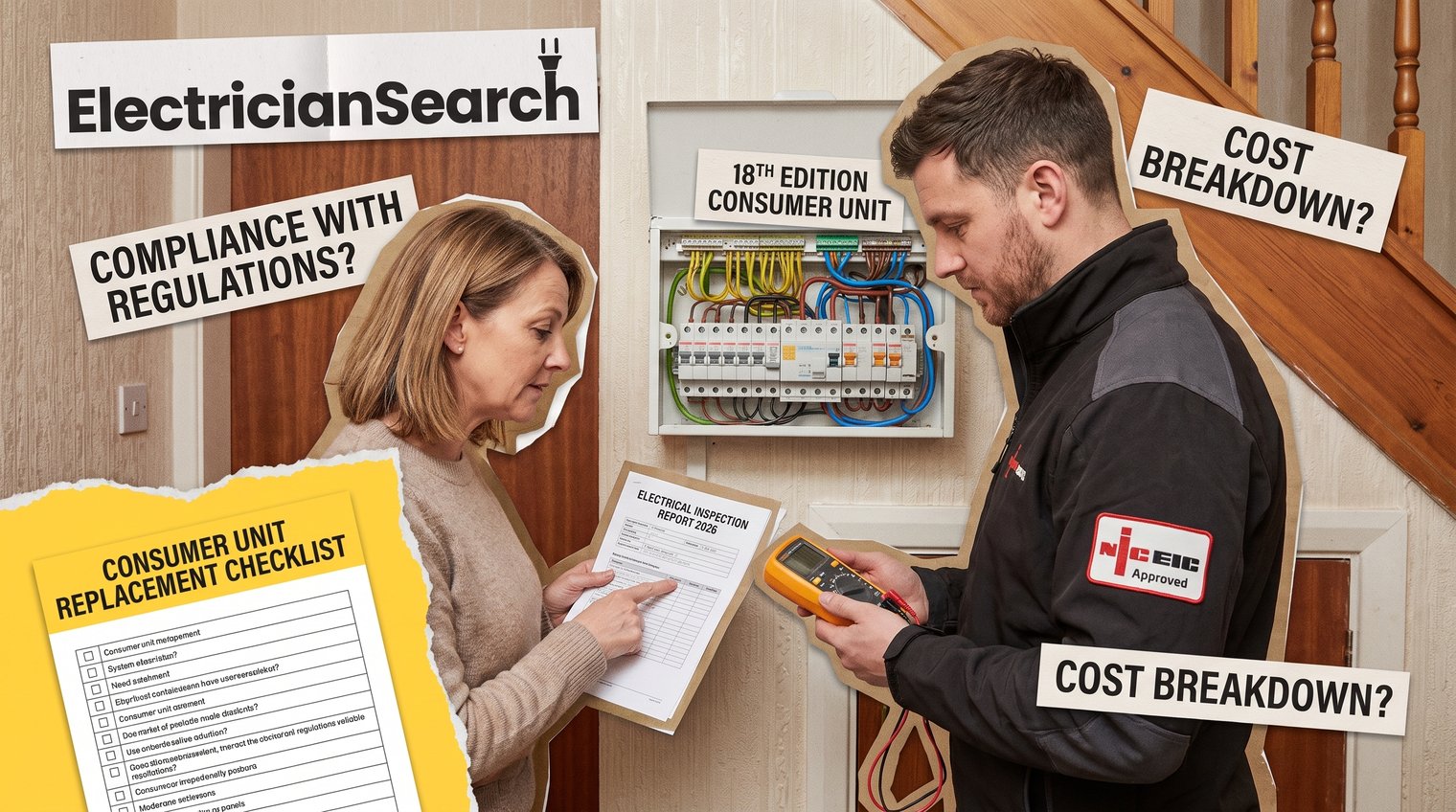
Consumer unit work is safety-critical. Before accepting a quote, establish who will carry out the installation, who will inspect and test it, and who is responsible for the paperwork afterwards. A suitably qualified, registered electrician should be able to explain this clearly.
- Ask who will complete the work and testing. The person pricing the job may not always be the person on site, so confirm who is responsible for the installation and final verification.
- Ask whether notification is required and who will handle it. Requirements can vary by UK nation and by the circumstances of the work. Get the process agreed before the job starts.
- Ask what documents you will receive. A quote should not leave certification as a vague promise or an unpriced extra.
Ask: "Will I receive an Electrical Installation Certificate and test results?"
Essential: confirm the handover documents in advance. Replacement work should be inspected and tested, with documentation identifying the installation, relevant circuits and test results. Ask when you will receive the Electrical Installation Certificate and whether it will be provided digitally, on paper or both. For more detail on expected paperwork, see what certificate an electrician should provide after work.
Keep the certificate with your property records. It can be useful during a future sale, when letting the property, for insurance queries and when later electrical work is being planned.
Ask: "Who handles Building Regulations notification if it applies?"
Agree responsibility before work begins. Ask the electrician whether notification applies in your situation, who submits it, and what confirmation you will receive once the process is complete.
This is not a detail to chase weeks after the installation. Put it in the written scope alongside testing and certification.
Give the electrician the right information about your home and circuits
A consumer unit cannot be specified safely from the number of bedrooms or the size of the house alone. A compact flat with an electric shower and induction hob may have very different demands from a larger home with gas cooking and heating.
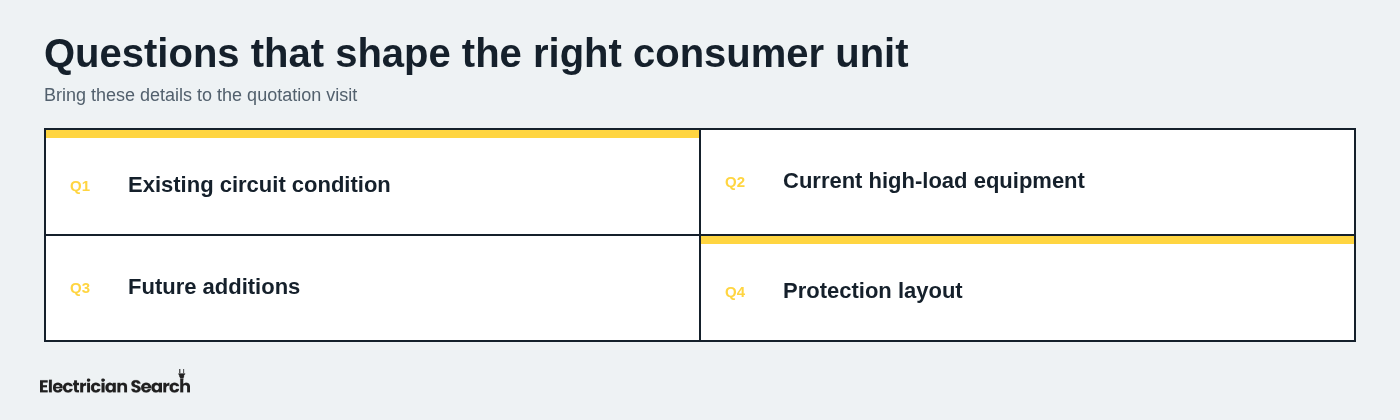
Give these details at the quotation stage:
- Property type and approximate age. Tell them whether it is a flat, house, conversion, older property or recent build, as access and circuit condition can differ widely.
- Known electrical issues. Mention flickering lights, sockets that feel warm, recurring tripping, damaged accessories, DIY alterations or previous unsatisfactory inspection findings.
- Recent changes. Include kitchen work, extensions, loft conversions, garden rooms and any circuits added by previous owners.
- High-load equipment. Flag electric showers, cookers, induction hobs, EV chargers, immersion heaters, heat pumps and other substantial loads.
- External and generating systems. Mention outdoor supplies, garages, sheds, solar PV and battery storage. These can affect the design, isolation arrangements and space required.
- Future plans. An intended extension, conversion or new EV charger may change what is sensible to install now. If an EV charger is part of your plans, see this EV electrician checklist before discussing capacity with the installer.
Ask: "Will you inspect the existing circuits before fitting a new unit?"
Essential: make circuit assessment part of the job, not an afterthought. A replacement consumer unit can expose faults on existing circuits during inspection and testing. The electrician should explain how those circuits will be checked and what happens if defects are found.
Ask how pre-existing issues will be recorded and how any remedial work will be priced. A clear process protects both sides: you know what is included, and no one assumes older wiring will pass tests without assessment.
Check the proposed consumer unit and protection design
The right board is not necessarily the biggest one or the one with the most features. It is the one designed around your current installation, the protection needed for each circuit and realistic future needs.
- Confirm the enclosure and location. Ask why the proposed unit is suitable for where it will be installed and whether access for future operation and inspection will remain practical.
- Check the number of ways and spare capacity. The board needs enough positions for current circuits, with sensible allowance for additions where appropriate.
- Ask about the main switch rating. This should be considered as part of the overall installation, not chosen in isolation.
- Request clear circuit labelling. Labels should help you identify what each protective device controls without guesswork.
- Understand the RCD or RCBO arrangement. The layout affects which circuits are interrupted when a fault occurs.
Ask: "Why have you chosen this RCD or RCBO arrangement?"
Essential: understand what trips together. RCDs and RCBOs are protective devices, but the arrangement matters in everyday use. With some designs, a fault on one circuit can affect other circuits sharing the same protective device. Circuit-level RCBO arrangements can limit the effect of a single fault, though the correct choice depends on the installation design and quote.
Ask the electrician to show you which circuits will be grouped together and what will happen if, for example, a kitchen appliance develops a fault. The aim is not to dictate the design yourself; it is to understand the practical consequences before agreeing to it.
Ask: "Is there room for future circuits?"
Nice to have: plan ahead where change is likely. Spare capacity can be useful if you expect an EV charger, heat pump, solar PV, battery storage, outbuilding supply, induction hob or extension in the next few years.
If no changes are likely, extensive spare capacity may not be a priority. Still, it is usually easier to discuss it before the board is installed than after all available ways are occupied.
Ask about surge protection, earthing and bonding
A consumer unit replacement is an opportunity to check parts of the wider installation that influence safety and protection. Do not assume every property needs identical upgrades, but do ask whether surge protection is recommended or required for your installation and whether the quote includes checks to earthing and main protective bonding.
- Ask about surge protection. The electrician should explain whether it is included, why it is suitable or not suitable for the installation, and how it affects the proposed design.
- Ask whether earthing and bonding will be checked. These arrangements may need assessment before the replacement can be completed properly.
- Separate included work from possible upgrades. If an issue is identified, ask whether the stated price includes putting it right or whether it will be quoted separately.
Ask: "Are the earthing and bonding arrangements adequate for this replacement?"
Essential: ask for the reason behind any extra work. If upgrades are needed, the electrician should explain what has been found, why it matters and whether the cost is included in the quote.
Not every home will require the same remedial work. The important point is that the arrangements are assessed rather than assumed.
Get a written quote that separates expected work from possible remedials
Online figures for consumer unit replacement cost can be a rough starting point, but they are not a reliable quote for your home. Circuit condition, the number of circuits, the chosen protection design, access, testing time and faults found during assessment can all alter the final cost.
Ask for a written scope covering:
- Labour and the consumer unit itself. The quote should identify the expected installation work and the proposed equipment.
- Protective devices and accessories. Confirm what is included rather than assuming all RCDs, RCBOs, surge protection or labelling are covered.
- Inspection, testing and certification. These should be a stated part of the work, not an optional line item.
- Notification where applicable. Make clear whether this is included and who is responsible.
- Making good and waste removal. Ask what happens to the old unit and whether minor finishing work is included.
- VAT and exclusions. A clear total avoids a misleading comparison between quotes.
Ask: "What is included, and what could change the final cost?"
Essential: agree a process for extras. Request a written list of assumptions and ask that additional work is explained and approved before it is carried out, except where immediate safety action is necessary.
Common variables include damaged accessories, circuit repairs, inadequate bonding, concealed faults and new capacity requirements. A lower initial figure is not automatically better if it excludes the testing, documentation or remedial work that a more detailed quote has already accounted for.
Plan the installation day and electrical downtime
Replacing a consumer unit involves a planned power interruption. Good preparation reduces disruption and makes it easier for the electrician to work safely and efficiently.
- Confirm the expected duration and power-off period. Ask when isolation will begin, whether it is likely to last for the full visit and what could extend the work.
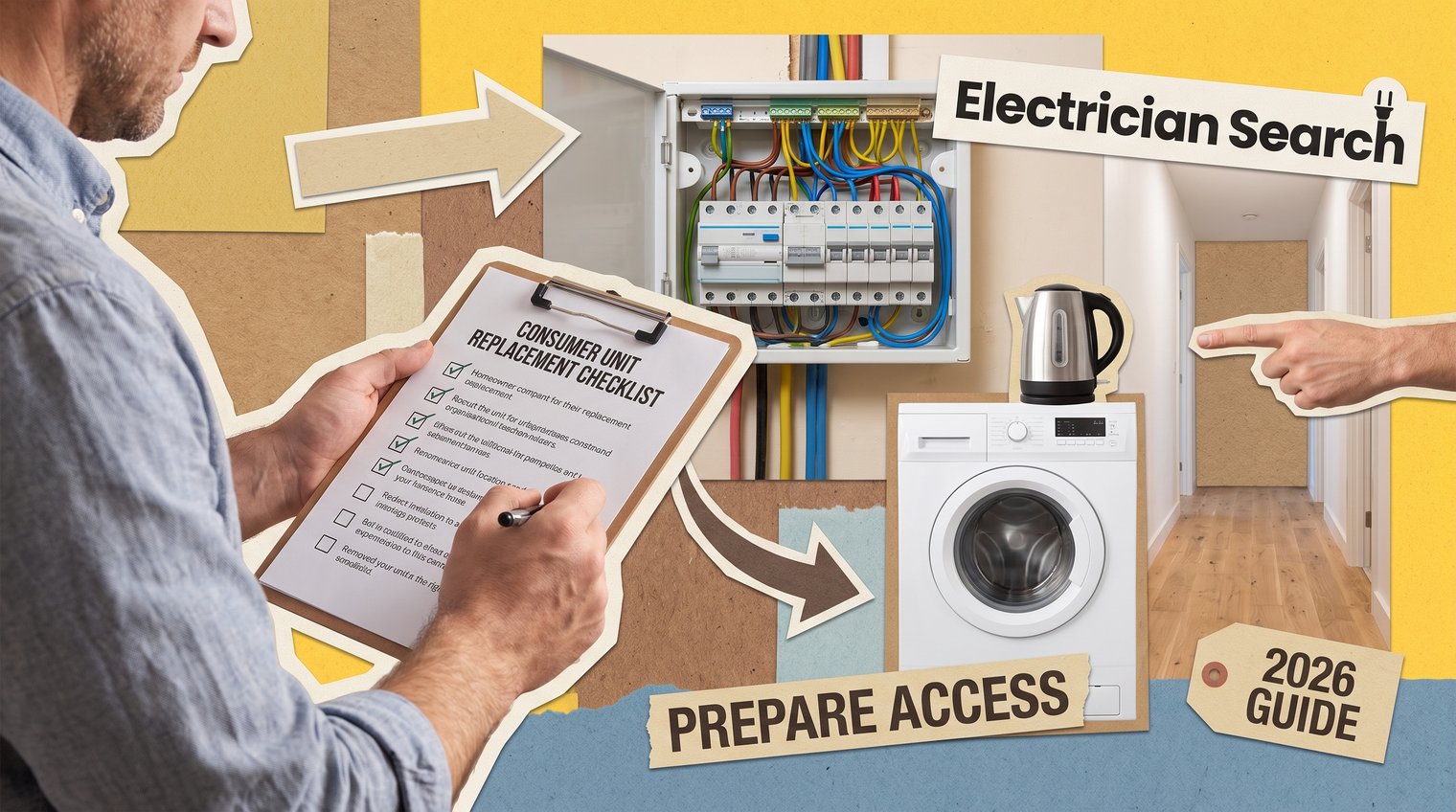
- Provide clear access to the consumer unit. Move furniture, stored items or decorations that block the working area.
- Arrange entry, parking and someone to be present if needed. These straightforward details can prevent a delayed start.
- Plan for food, medical and security equipment. Consider freezers, refrigeration, medical equipment, alarms, doorbells, routers and broadband settings before the shutdown.
- Secure pets and children. The work area should remain clear while covers are removed and testing takes place.
If you see signs of immediate danger, such as burning smells, scorching, smoke, buzzing or obvious heat damage, do not wait for a planned upgrade or continue relying on the old unit. Contact a qualified electrician urgently.
Ask: "How long will the power be off, and what should I switch down first?"
Essential: prepare for a controlled shutdown. Ask what appliances should be turned off or unplugged before isolation and whether any equipment needs special reconnection checks afterwards.
This can reduce inconvenience from interrupted appliances and helps you avoid surprises such as clocks, alarms or internet equipment needing to be reset.
Know what testing, labelling and handover should include
Handover is not a formality after payment. It is the point where you confirm what was installed, understand the basic controls and receive the records that prove the work was tested.
- Confirm inspection and testing are complete. Ask whether all relevant circuits have been tested after installation and whether any limitations or observations remain.
- Check the circuit schedule. Labels should identify circuits clearly enough for normal use and future maintenance.
- Identify the devices. Ask the electrician to point out the main switch, protective devices and any test buttons you may need to recognise.
- Request trip-reset guidance. A short explanation is useful when a circuit trips later, particularly if several devices look similar.
- Collect certificates and notification confirmation. Do not leave unsure about what documents will arrive later and when.
Ask: "Can you show me how to identify and reset a tripped circuit safely?"
Ask for a simple demonstration using the installed labels and devices. You should know how to identify the affected circuit and what to do if a device will not reset.
Repeated tripping, or a protective device that will not stay reset, needs professional investigation. Do not keep resetting it in the hope that the problem will disappear.
Review the work after installation without disturbing it
Once the electrician has finished, carry out a brief, practical review. You are not expected to inspect internal wiring or remove covers; focus on the agreed scope, the visible finish and the documents.
- Confirm the unit is securely installed and clearly labelled. You should be able to identify circuits and operate the relevant controls without ambiguity.
- Compare the completed work with the quote. Check that agreed items, including testing and certification, have not been omitted or changed without explanation.
- Check certificates match the property and date. Make sure the address and installation details are correct before filing them.
- Store paperwork safely. Keep certificates with other property records, ideally in both digital and printed form.
- Raise missing details promptly. Contact the contractor quickly if labels are absent, the scope is unclear or expected documents have not been supplied.
Your essential consumer unit replacement checklist
Use this compact list when speaking to electricians and comparing quotes.
Essential questions
- What evidence shows my current consumer unit needs replacing? Ask for inspection findings, observed defects or a clear explanation linked to planned electrical work.
- Will you inspect and test the existing circuits before fitting the new unit? Existing faults can affect whether the work can be completed as planned.
- Who will carry out, inspect and test the installation? Confirm responsibility for the safety-critical parts of the work.
- Will I receive an Electrical Installation Certificate and test results? Keep the completed documentation with your property records.
- Who handles notification if it applies? Agree the process and the confirmation you will receive.
- Why have you chosen this RCD or RCBO arrangement? Understand which circuits could trip together and why the design suits your home.
- Are earthing and bonding arrangements adequate? Ask whether any upgrade is needed and whether it is included in the price.
- What is included in the quote, and what could change the final cost? Get testing, certification, equipment, VAT and possible remedials clearly separated.
- How long will the power be off? Plan for appliances, alarms, broadband, access and any medical equipment.
- Will you show me how to identify and reset a tripped circuit safely? Make handover and clear labelling part of the job.
Nice-to-have questions
- Is there practical room for future circuits? This is worth considering if an EV charger, solar system, heat pump, extension or outbuilding supply may be added later.
- Is surge protection recommended for this installation? Ask for an explanation based on your home's circumstances and the proposed design.
- What will be done with the old unit and any waste? Confirm removal and making good so there are no avoidable loose ends.
When you are ready to seek local help, use ElectricianSearch to compare nearby listed electrical professionals, then ask each provider who will carry out, inspect, test and certify the work. You can also use this electrician near me checklist to compare local providers before accepting a quote.